How to Write a Resume and Cover Letter: The Complete Guide
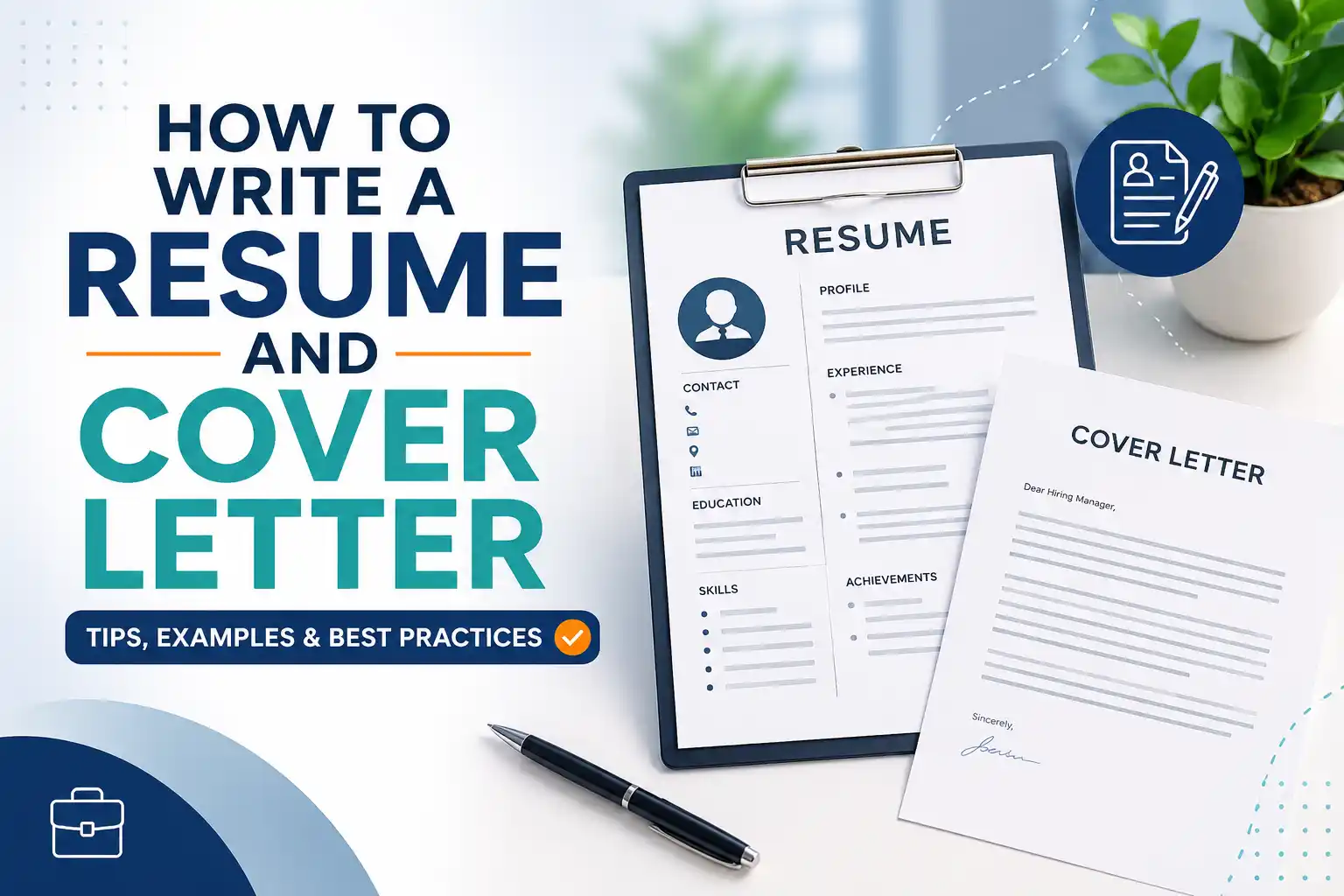
You are ready to apply for a job. You have the skills and experience. But when you sit down to write your resume and cover letter, you freeze. What format should you use? What should you include? How do you make yourself stand out in a pile of hundreds of applications?
You are not alone. Writing a resume and cover letter is one of the most challenging , and important , tasks in any job search. Your resume and cover letter are your first impression. They are your chance to tell your story, showcase your value, and convince a hiring manager that you are the right person for the job.
This guide will teach you everything you need to know about how to write a resume and cover letter that get results. We will cover the structure, the formatting, the content, and the strategies to help you stand out in today's competitive job market. By the end, you will have the tools to create a winning job application.
Resume & Cover Letter at a Glance
1 Why Your Resume and Cover Letter Matter
Your resume is a summary of your professional experience, education, and skills. It is the primary document that hiring managers use to evaluate your qualifications. Your cover letter is a persuasive document that introduces you, explains why you are interested in the role, and highlights your most relevant achievements.
Together, your resume and cover letter are your marketing materials. They are your chance to make a compelling case for why you are the right person for the job. In a competitive job market, a well-written resume and cover letter can be the difference between getting an interview and being overlooked.
According to career experts, the average recruiter spends only 6–7 seconds scanning a resume. That means you have only seconds to make an impression. Your resume must be clear, concise, and easy to scan. Your cover letter must grab attention and make the reader want to learn more.
First Impression
Your resume and cover letter are often the first , and sometimes only , impression a hiring manager will have of you.
Showcases Your Value
A strong resume and cover letter highlight your achievements and demonstrate the value you can bring to an organisation.
Opens Doors
Well-written application documents get you interviews. They are your entry ticket into the hiring process.
Passes ATS Screens
Many companies use Applicant Tracking Systems (ATS) to screen resumes. A well-optimised resume passes these automated screens.
2 How to Choose the Right Resume Format
There are three main resume formats: chronological, functional, and combination (hybrid). The right choice depends on your experience and career goals.
Chronological Resume
The chronological resume lists your work experience in reverse chronological order, starting with your most recent job. This is the most common format and is preferred by most recruiters.
Best for
Candidates with a strong, consistent work history in a single field. Employers expect this format and find it easy to scan.
Functional Resume
A functional resume organises your experience around skills rather than job titles. It focuses on what you can do, not where you did it.
Best for
Career changers, people with employment gaps, or those with diverse experience that does not fit a linear narrative.
Combination (Hybrid) Resume
The combination resume merges elements of both formats. It includes a skills section at the top and a chronological work history below.
Best for
Most job seekers. It combines the clarity of the chronological format with the flexibility of the skills-based approach.
Resume Format Comparison
3 How to Format Your Resume
Proper formatting is essential for a professional, ATS-friendly resume. Here are the key formatting rules for 2025.
Font and Size
Use clean, professional fonts like Calibri, Arial, Lato, or Garamond. Keep the font size between 10 and 11 points for body text, and use 14–20 points for your name.
Margins and Spacing
Maintain margins between 0.5 and 1 inch. Use white space strategically to separate sections and make the document easy to scan.
Length
Most resumes should be one to two pages. Entry-level candidates should aim for one page; experienced professionals may use two.
Use Clear Headings
Use standard section headings like "Professional Summary," "Skills," "Experience," and "Education". This helps both human readers and ATS software navigate your resume.
Avoid Graphics and Images
ATS software often cannot read images, graphics, or logos. Keep your resume clean and text-based.
Resume Formatting Checklist
- Font: Clean sans-serif (Calibri, Arial, Lato) , 10–11pt body, 14–20pt name
- Margins: 0.5–1 inch
- Length: 1–2 pages
- Headings: Clear, standard, and consistent
- Bullet points: Use for achievements and responsibilities
- File format: Save as PDF (unless otherwise specified)
- No graphics: Avoid images, icons, and logos
4 What to Include in Your Resume
Every resume should include certain essential sections. Here is what to include, section by section.
Contact Information
Include your full name, phone number, email address, and location (city and state). You can also include links to your LinkedIn profile or portfolio.
Professional Summary
A professional summary is a short paragraph (3–5 sentences) at the top of your resume that highlights your most valuable skills and experience. Replace the outdated "objective" statement with a compelling summary.
Example
"Results-driven Marketing Professional with 7+ years of experience in digital strategy and brand management. Proven track record of increasing engagement by 40% and driving revenue growth. Seeking a senior marketing role in a fast-paced, innovative environment."
Skills
List the key skills that are relevant to the job. Include both hard skills (technical abilities) and soft skills (communication, leadership). Look at the job description to identify the skills the employer is looking for.
Work Experience
This is the most important section. List your jobs in reverse chronological order. For each role, include:
- Job title
- Company name and location
- Dates of employment
- 3–5 bullet points describing your responsibilities and achievements
Focus on achievements, not duties. Use action verbs and quantify your results.
Education
List your education in reverse chronological order. Include the name of the institution, the dates you attended, and the qualifications you achieved.
Additional Sections (Optional)
Depending on your experience and the job, you may also include: certifications, volunteer work, professional memberships, languages, or publications.
5 How to Write About Your Experience
The work experience section is the most important part of your resume. Here is how to write it effectively.
Use Action Verbs
Start each bullet point with a strong action verb. Examples include: achieved, increased, led, managed, developed, improved, reduced, delivered, created, implemented.
Quantify Your Achievements
Numbers make your achievements concrete and impressive. Whenever possible, include metrics:
- "Increased sales by 20% within six months"
- "Reduced customer complaints by 35% through a new training program"
- "Managed a budget of $500,000"
- "Led a team of 12 people"
Use the PAR Method
Structure each bullet point using the PAR (Problem-Action-Result) method:
- Problem/Situation: What was the challenge or context?
- Action: What did you do?
- Result: What was the outcome? (Quantify if possible)
Weak (Duties)
"Responsible for managing social media accounts."
Strong (Achievements)
"Increased Instagram engagement by 40% over six months using a targeted content strategy."
6 How to Write a Cover Letter
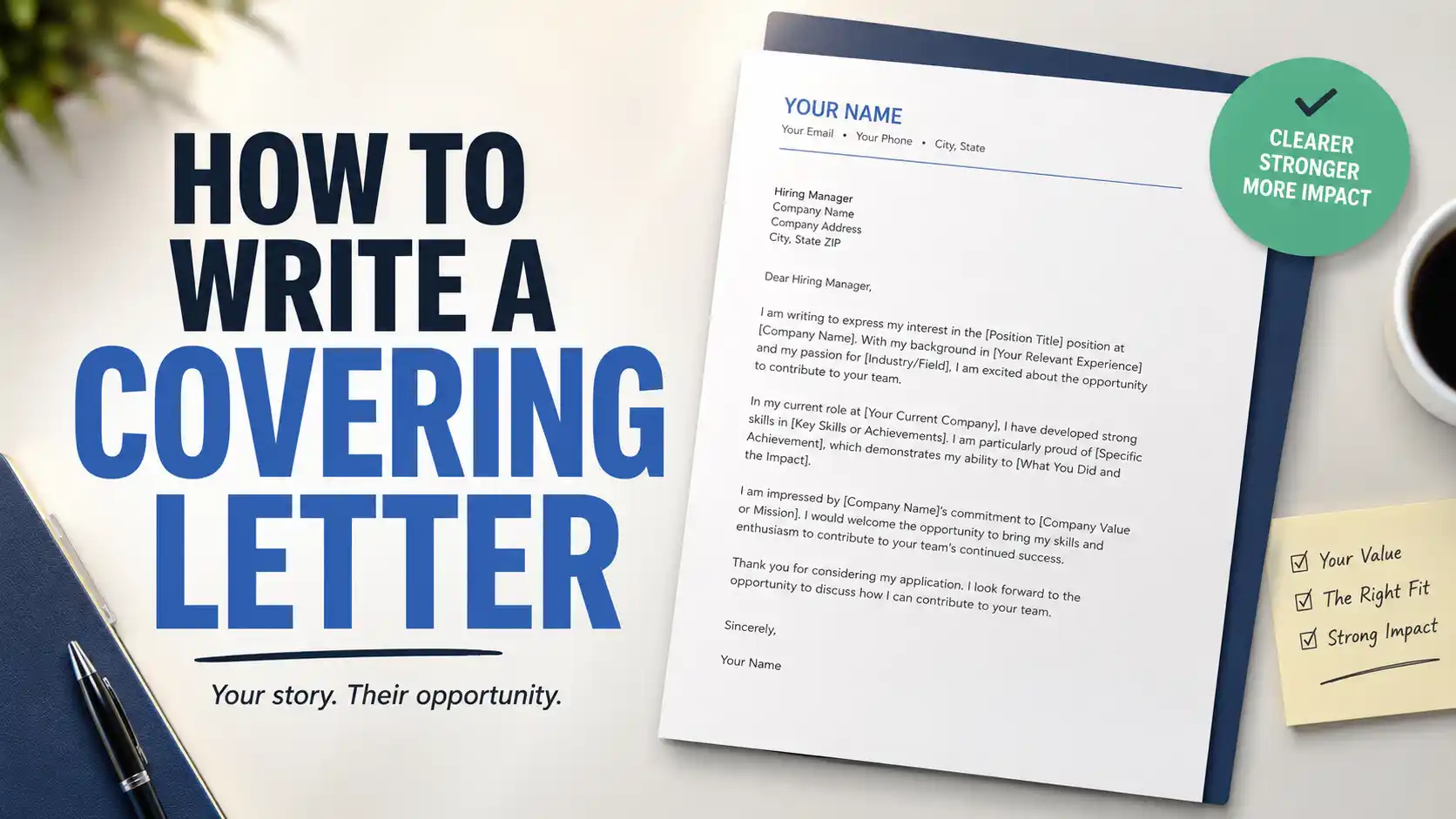
A cover letter is a one-page document that introduces you, explains why you are interested in the role, and highlights your most relevant achievements.
Structure Your Cover Letter
A well-structured cover letter follows a standard format:
- Contact information (your details and the employer's details)
- Salutation: "Dear [Name]" (address it to a specific person if possible)
- Opening paragraph: State the position you are applying for, where you found it, and your enthusiasm
- Body paragraphs: Provide specific examples of your skills and achievements that relate to the job
- Closing paragraph: Summarise your interest, thank the reader, and state your availability for an interview
- Complimentary close: "Sincerely," or "Yours faithfully,"
Tailor Every Cover Letter
Never send a generic cover letter. Customise each letter for the specific job and company. Research the company and mention something specific that attracted you to the role.
Keep It Concise
A cover letter should be no longer than one page. Aim for 3–4 paragraphs. Be brief, specific, and compelling.
Sample Cover Letter Opening
"I am excited to apply for the Marketing Coordinator role at Bright Path Consulting. With a passion for digital campaigns and a proven record of increasing social media engagement, I am eager to bring my skills to a company recognised for its innovative approach to branding."
7 How to Optimise for Applicant Tracking Systems (ATS)
Most companies use Applicant Tracking Systems (ATS) to screen resumes before a human sees them. Here is how to optimise your resume for ATS success.
Use Keywords from the Job Description
ATS software scans for keywords that match the job description. Incorporate these keywords naturally throughout your resume , especially in the summary, skills, and experience sections.
Keep Formatting Clean and Simple
Avoid complex formatting like tables, text boxes, or graphics. Use standard section headings like "Professional Summary," "Skills," "Experience," and "Education".
Spell Out Acronyms
Spell out acronyms at least once on your resume (e.g., "Search Engine Optimisation (SEO)").
Avoid Keyword Stuffing
Do not overstuff your resume with keywords. Use them naturally and in context.
ATS Tips at a Glance
8 Common Mistakes to Avoid
Even experienced job seekers make mistakes. Here are the most common errors and how to avoid them.
Listing Duties Instead of Achievements
Focusing on what you were "responsible for" rather than what you accomplished.
Fix: Use action verbs and quantify your results.
Using a Generic Resume
Sending the same resume to every employer.
Fix: Tailor your resume for each application. Use keywords from the job description.
Spelling and Grammar Mistakes
Typos and grammatical errors suggest a lack of attention to detail.
Fix: Proofread carefully. Read it aloud. Ask someone else to review it.
Too Long or Too Short
A resume that is too long (over 2 pages) or too short (under 1 page for a professional role).
Fix: Aim for 1–2 pages. Include only relevant information.
Generic Cover Letter
Sending a generic cover letter that could apply to any job.
Fix: Customise every cover letter. Mention the company and role specifically.
Using Clichés
Overused phrases like "team player," "hard worker," or "go-getter" without evidence.
Fix: Show, don't tell. Use specific examples to demonstrate your skills.
9 How to Revise Your Resume and Cover Letter
Great application documents are not written; they are rewritten. Revision is where your resume and cover letter go from good to great. Here is a step-by-step process for revising your documents.
Step 1: Take a Break
Step away from your documents for a few hours or a day. This gives you fresh eyes and helps you see your work more objectively.
Step 2: Read It Aloud
Read your resume and cover letter aloud. Does it sound professional and natural? Are there any awkward phrases?
Step 3: Check for Tailoring
Review the job description. Have you included the keywords and highlighted the most relevant experience?
Step 4: Check for Achievements
Go through each bullet point. Have you quantified your results wherever possible? If not, add numbers.
Step 5: Check Formatting
Is your resume easy to scan? Are the fonts consistent? Is it ATS-friendly?
Step 6: Get Feedback
Ask a mentor, career advisor, or trusted colleague to review your documents. Fresh eyes can catch issues you have missed.
10 Practice Exercises to Improve Your Application
The best way to get better at writing resumes and cover letters is to practice. Here are some exercises to help you sharpen your skills.
Exercise 1: The "Duties to Achievements" Rewrite
Take a list of your job duties. Rewrite each one as an achievement. Use action verbs and quantify the results. Compare the two versions.
Exercise 2: Tailor a Resume to a Job Description
Find a job description online. Highlight the keywords. Now rewrite your resume to match that job description as closely as possible.
Exercise 3: Write a Compelling Cover Letter Opening
Write five different opening sentences for a cover letter. Each one should try a different approach: enthusiasm, accomplishment, connection, or curiosity. Choose the best one.
Exercise 4: Peer Review Swap
Swap resumes and cover letters with a colleague. Review each other's documents and provide honest feedback. What is working? What could be stronger?
Final Thoughts
Writing a resume and cover letter is an essential skill for any job seeker. A well-crafted resume and cover letter can open doors, get you interviews, and help you land the job you want.
Remember that your resume and cover letter are not just lists of facts. They are marketing documents that tell your story and demonstrate your value. Every word should work to convince the employer that you are the right person for the job.
Keep these principles in mind as you write:
- Tailor every application to the job. Generic documents are easily spotted and ignored.
- Focus on achievements, not duties. Show the impact you have made.
- Quantify your results. Numbers make your achievements concrete.
- Optimise for ATS. Use keywords from the job description and keep formatting clean.
- Proofread carefully. Typos suggest a lack of attention to detail.
- Get feedback. Fresh eyes catch what you have missed.
Your dream job is out there. Your skills and experience are valuable. A great resume and cover letter are the keys that open the door. Take the time to write them well, and you will give yourself the best possible chance of success.
Now go write a resume and cover letter that get you noticed.