How to Write a Eulogy: The Complete Guide with Examples
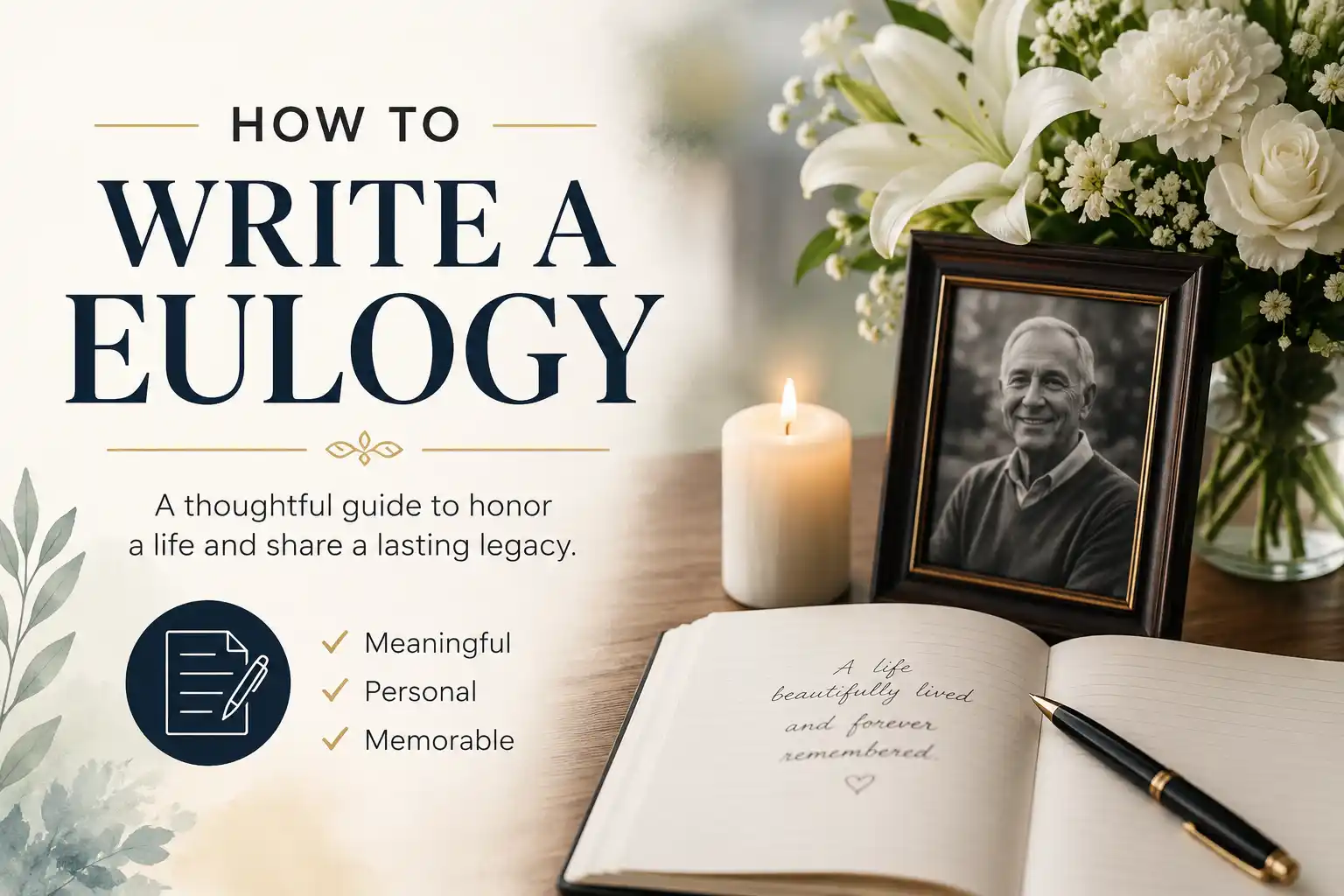
You have been asked to write a eulogy. It is a profound honour , and it can feel overwhelming, especially when you are grieving. Where do you start? How do you capture a lifetime of memories in a few minutes? What if you get it wrong?
You are not alone. Writing a eulogy is one of the most meaningful and challenging tasks you can undertake. But it is also a gift , to yourself, to your loved one, and to everyone who gathers to remember them. A well-crafted eulogy honours a life, shares precious memories, and brings comfort to those who mourn.
This guide will walk you through how to write a eulogy step by step. We will cover the purpose, the structure, the gathering of memories, the writing process, and the delivery. By the end, you will have the tools and confidence to create a tribute that truly honours your loved one.
Eulogy Writing at a Glance
1 What Is a Eulogy and Why Does It Matter?
A eulogy is a speech delivered at a funeral or memorial service that pays tribute to someone who has died. It reflects on their life, character, and legacy, sharing memories and offering comfort to those who grieve.
Writing a eulogy matters because it is a final gift to the person you have lost. It is an opportunity to celebrate their life, share their story, and help others understand who they truly were. A eulogy can bring solace to mourners, create a sense of connection, and preserve the memory of the deceased for generations to come.
No two eulogies are the same , each one is as unique as the person it honours. There is no "right" way to write one. The most important thing is that it is sincere and reflective of the person you are remembering.
Honours and Remembers
A eulogy celebrates the life and character of the person who died, ensuring they are remembered with love and respect.
Shares Their Story
It offers insights into who they were , beyond dates and facts , through personal stories and reflections.
Provides Comfort
Sharing positive memories and acknowledging the loss can bring solace to fellow mourners.
Preserves Legacy
A eulogy creates a lasting tribute that can be shared with future generations, keeping their memory alive.
2 The Fundamentals of Writing a Eulogy
Before you start writing, there are some foundational principles to keep in mind.
Speak from the Heart
The best advice for writing a eulogy is to speak from the heart, in a way that fits the person who has died. You do not need to be a great writer , sincerity matters most.
Make It Personal
A eulogy should reflect the character, personality, achievements, and values of the person who has died. Use specific stories and details that bring them to life.
Consider Your Audience
Think about who will be listening. Include moments that will resonate with family, friends, and colleagues. A eulogy is a collective tribute , it should speak to everyone who loved them.
There Is No Perfect Eulogy
Remember that there is no "right" or "wrong" way to write a eulogy. Just do your best and speak from the heart. Your words will be a gift to everyone who hears them.
3 How to Gather Memories and Ideas
The first step in writing a eulogy is gathering your thoughts and memories. Do not try to write the speech straight away , first, collect your ideas.
Start with Reflection
Take quiet time to remember the person. Think about what made them special , their values, passions, and the moments that defined their character. Consider how they impacted those around them and the legacy they leave behind.
Talk to Others
Speak with family and friends to collect anecdotes and memories. They might share stories or perspectives you had not thought of. This process enriches your content and makes the eulogy a collective tribute.
Look for Themes
As you gather memories, look for recurring themes that capture the essence of the person. Was it their kindness? Their humour? Their resilience? These themes will help structure your eulogy.
Questions to Ask Yourself
Here are some questions to guide your reflection:
- What words would you use to describe them?
- What is your favourite memory of them?
- How did they impact your life?
- What made them unique?
- What did they love doing?
4 How to Structure a Eulogy
A well-structured eulogy is easier to write and clearer for listeners. Here is a simple, effective structure.
Introduction
Begin by introducing yourself and your relationship to the person who died. Briefly state your purpose , that you are there to share memories and celebrate their life. You could start with a short quote, a defining characteristic, or a warm opening that sets the tone.
Example
"For those who do not know me, I am [Name], and I had the privilege of being [Name]'s [relationship]. Today, I want to share some of the memories that made them so special."
Body , The Main Part
This is where you share the stories and insights you gathered. Do not just list facts , weave them into a narrative. You can structure this chronologically (early life, career, family, later life) or thematically (focusing on different aspects like their work, family life, sense of humour, or kindness).
Share 2–4 specific, brief stories that illustrate key points about them. Focus on the positive, but it is okay to acknowledge challenges if appropriate and done sensitively. Maintain an authentic tone , if they were funny, include gentle humour. If they were serious, reflect that.
Closing
Summarise the person's essence or lasting impact. End with a final thought or message, often expressing how the deceased will be remembered and the impact they had on those around them. You might also include a meaningful quote, poem, or a final farewell.
Example
"Though we say goodbye today, [Name]'s spirit will always remain with us. They taught us what it means to love unconditionally, and for that, we will be forever grateful."
Common Eulogy Structures
5 What to Include in a Eulogy
Here is a checklist of elements to consider as you write your eulogy.
Biographical Details
Include important facts , where they were born, their family, their education, their career. These provide a framework for their story.
Personal Traits and Character
What words describe them? Kind, funny, determined, quiet, adventurous, creative? What made them unique? Think about their quirks, habits, and sayings.
Passions and Interests
What did they love doing? Hobbies, travel, music, books, sports, causes they cared about? Sharing their passions brings colour to the tribute.
Relationships
Reflect on their connections with family, friends, and colleagues. How did they impact others? Discuss their role as a parent, sibling, spouse, or friend.
Specific Stories and Anecdotes
This is the heart of the eulogy. Concrete examples bring the person to life far better than general descriptions. Share short stories that illustrate their personality, kindness, humour, or achievements.
Achievements and Milestones
Highlight significant moments in their career, academic achievements, or hobbies they excelled in. Also include family milestones , marriage, children, grandchildren.
A Note on Humour
If appropriate, include gentle humour. Attendees will appreciate a smile or chuckle during the speech. A well-placed lighthearted story can bring warmth to the tribute.
6 Common Mistakes to Avoid
Even well-intentioned writers make mistakes. Here are the most common errors and how to avoid them.
Trying to Cover Everything
Attempting to summarise an entire life in a few minutes can lead to a rushed, superficial speech.
Fix: Focus on a few key stories and themes that capture the person's essence.
Being Too Vague
Using general descriptions without specific examples. "They were kind" is forgettable.
Fix: Use specific stories that illustrate their kindness, humour, or other qualities.
Including Inappropriate Details
Sharing private, embarrassing, or negative things that are out of character.
Fix: Be respectful. Focus on the positive aspects of their life and character.
Making It About You
Spending too much time on your relationship with the deceased and not enough on their broader life.
Fix: Balance your personal perspective with stories that speak to everyone who knew them.
Not Practicing
Delivering a eulogy without rehearsing can lead to stumbling, rushing, or going over time.
Fix: Practice reading your eulogy aloud several times. Time yourself.
Forgetting to Introduce Yourself
Some people in the audience may not know who you are or your connection to the deceased.
Fix: Always begin by introducing yourself and your relationship to the person who died.
7 How to Write a Eulogy: Step-by-Step
Here is a step-by-step process to guide you from blank page to finished eulogy.
Step 1: Understand the Purpose
Before you start writing, remember why you are giving this speech. A eulogy aims to honour, remember, share their story, and provide comfort.
Step 2: Gather Your Thoughts and Memories
Brainstorm and collect your ideas. Note down key life details, personality traits, passions, relationships, and specific stories. Talk to other friends and family members.
Step 3: Choose a Structure
Decide whether you will use a chronological, thematic, or storytelling approach. This will help you organise your material.
Step 4: Write the Draft
Write your eulogy following your chosen structure. Start with the introduction, then the body (stories and memories), and end with a closing. Do not worry about perfection , just get your ideas down.
Step 5: Revise and Refine
Read your draft aloud. Does it sound natural? Are there any awkward phrases? Cut unnecessary words. Seek feedback from someone you trust.
Step 6: Practice Your Delivery
Practice reading your eulogy several times. Time yourself , aim for 5–10 minutes. Practice in front of a mirror or a small group.
Step 7: Prepare for the Day
Print your eulogy in a large, clear font. Bring a bottle of water and tissues. Arrive early on the day. Know that it is alright to show how you are feeling.
8 Tips for Delivering a Eulogy
Delivering a eulogy can be challenging, especially during a time of grief. Here are some practical tips to help you.
Speak Slowly and Clearly
When you are nervous, you tend to speak faster. Consciously slow down. Breathe, pause when needed, and speak clearly.
Bring Your Notes
It is perfectly okay to read from a printed copy. Do not try to memorise the entire speech , having your notes will give you confidence.
Make Eye Contact
Try to make eye contact with the audience during your delivery. This helps create a connection and makes your words more impactful.
Be Kind to Yourself
Emotions may surface , that is natural. Take your time. The audience is supportive and understands the difficulty of the task.
Know Your Context
Know where your eulogy fits in the order of speakers. Familiarise yourself with the venue , will there be a podium? A microphone?
A Final Thought on Delivery
Remember, the audience is there to remember and honour the person who died. They are not judging your performance. Your sincerity and love will shine through.
9 Eulogy Examples
Reading examples can help you understand how to approach writing a eulogy. Here are some sample excerpts to illustrate different styles.
Example 1: For a Parent
"My father was a quiet man, but his actions spoke louder than any words ever could. I remember the way he would wake up early every Saturday to make pancakes for the family , he never missed a week, and he always did it with a smile. He taught me that love is not about grand gestures, but about showing up, day after day. He showed up for us, and he showed up for everyone who needed him. That is the legacy he leaves behind."
Example 2: For a Friend
"To his mates, he was the one who always showed up , rain, hail or shine. He had a laugh that could fill a room and a way of making everyone feel welcome. I will never forget the time he drove two hours in the middle of the night to help me when my car broke down. He did not complain , he just said, 'That is what friends are for.' And that was [Name] , always there, always generous, always a true friend."
Example 3: Thematic Approach
"If there is one word that defines [Name], it is kindness. I saw it in the way they treated everyone , from their closest family to a stranger on the street. Mum had a way of making everyone feel welcome. Whether it was a neighbour, a friend, or a complete stranger, she treated everyone like family. She dedicated over 20 years to volunteering at the local shelter. Her compassion touched countless lives. That is the kind of person she was , and that is the kind of world she leaves behind."
10 Practice Exercises to Improve Your Eulogy Writing
The best way to get better at writing a eulogy is to practice. Here are some exercises to help you prepare.
Exercise 1: Memory Gathering
Spend 15 minutes writing down every memory you have of the person , no matter how small. Then, circle the 3–4 stories that best capture who they were.
Exercise 2: Write a Thematic Eulogy
Choose one quality that defined the person (e.g., kindness, humour, resilience). Write a short eulogy that uses 2–3 stories to illustrate that quality.
Exercise 3: Practice Delivery
Read your eulogy aloud to a trusted friend or family member. Ask for feedback on the flow, tone, and content. Time yourself.
Exercise 4: Read Published Eulogies
Find and read published eulogies online. Notice how different writers structure their tributes and use stories to bring the person to life.
Final Thoughts
Writing a eulogy is one of the most profound acts of love you can offer. It is a chance to honour a life, share precious memories, and bring comfort to those who mourn.
Remember that your eulogy does not need to be perfect. It just needs to be sincere. The most important thing is that your words come from the heart and reflect the true essence of the person you are remembering.
Keep these principles in mind as you write:
- Speak from the heart. Sincerity matters more than perfection.
- Use specific stories. Anecdotes bring the person to life.
- Focus on the positive. Celebrate their life, character, and impact.
- Keep it personal. Share your unique perspective and memories.
- Practice your delivery. Familiarity with your words will help you stay calm.
Writing a eulogy is a journey of remembrance. It is a way to say goodbye, to celebrate a life, and to keep their memory alive. Take a deep breath. Start with one memory. Let your love guide your words.
Now go write a tribute that honours their life.