How to Write a Report: The Complete Guide with Examples
You need to write a report. Maybe it is for work , a business report, a project status update, or a financial analysis. Maybe it is for school , a lab report, a research report, or a case study. You know it should be structured, professional, and clear, but you are not sure where to start.
You are not alone. Writing a report is a common but challenging task. Unlike an essay, a report is designed to be read quickly and efficiently. It uses headings, bullet points, and visual aids to present information in a way that is easy to digest. A well-written report can inform decisions, solve problems, and drive action.
This guide will teach you everything you need to know about how to write a report. We will cover the structure, the formatting, the content, and the common mistakes to avoid. By the end, you will have the tools to write reports that are clear, professional, and effective.
Report Writing at a Glance
1 What Is a Report and Why Does It Matter?
A report is a structured document that presents information, findings, and recommendations on a specific topic. Reports are used in business, government, academia, and non-profit organisations to communicate data, analyse problems, and support decision-making.
Unlike an essay, which is often argumentative and narrative, a report is objective, informative, and action-oriented. It is designed to be read quickly , readers often scan headings, summaries, and key findings before diving into the details. A well-written report enables readers to make informed decisions.
Reports matter because they are a primary tool for professional communication. They provide a formal record of research, analysis, and recommendations. They help organisations track progress, evaluate options, and plan for the future.
Informs Decisions
Reports provide the data and analysis needed to make informed decisions in business, policy, and research.
Communicates Complex Information
Reports break down complex topics into manageable sections, making them easier to understand.
Creates a Record
Reports provide a permanent record of research, analysis, and recommendations for future reference.
Supports Accountability
Reports document what was done, what was found, and what actions are recommended, promoting transparency and accountability.
2 The Fundamentals of Report Writing
Before you start writing, you need to understand the foundational principles that underpin every effective report.
Know Your Purpose and Audience
Why are you writing this report? What do you want the reader to know or do? Who is the reader? A report for a technical audience will differ from one for senior executives. Purpose and audience shape everything , the content, the structure, the tone, and the level of detail.
Be Objective and Factual
Reports are based on evidence and data. Avoid subjective opinions and emotional language. Present facts clearly and let the reader draw their own conclusions. If you offer recommendations, base them on the evidence presented.
Use a Clear Structure
Reports follow a standard structure that makes them easy to navigate. Use headings, subheadings, and numbered sections. Include a table of contents for longer reports. A clear structure helps readers find what they need quickly.
Write for Scannability
Readers often scan reports rather than read them word-for-word. Use short paragraphs, bullet points, and visual aids (tables, charts, graphs) to highlight key information. Place the most important information in the executive summary and conclusions.
The "So What?" Test
For every piece of information you include in a report, ask yourself: "So what?" Why does this matter to the reader? How does it help them? If you cannot answer that question, consider whether the information is necessary.
3 Types of Reports
There are many types of reports, each with a specific purpose and format. Here are some of the most common types.
Business Report
Used in organisations to analyse business activities, track performance, and support decision-making. Examples: financial reports, market research reports, and project status reports.
Key trait: Focus on business performance and actionable insights.
Lab Report
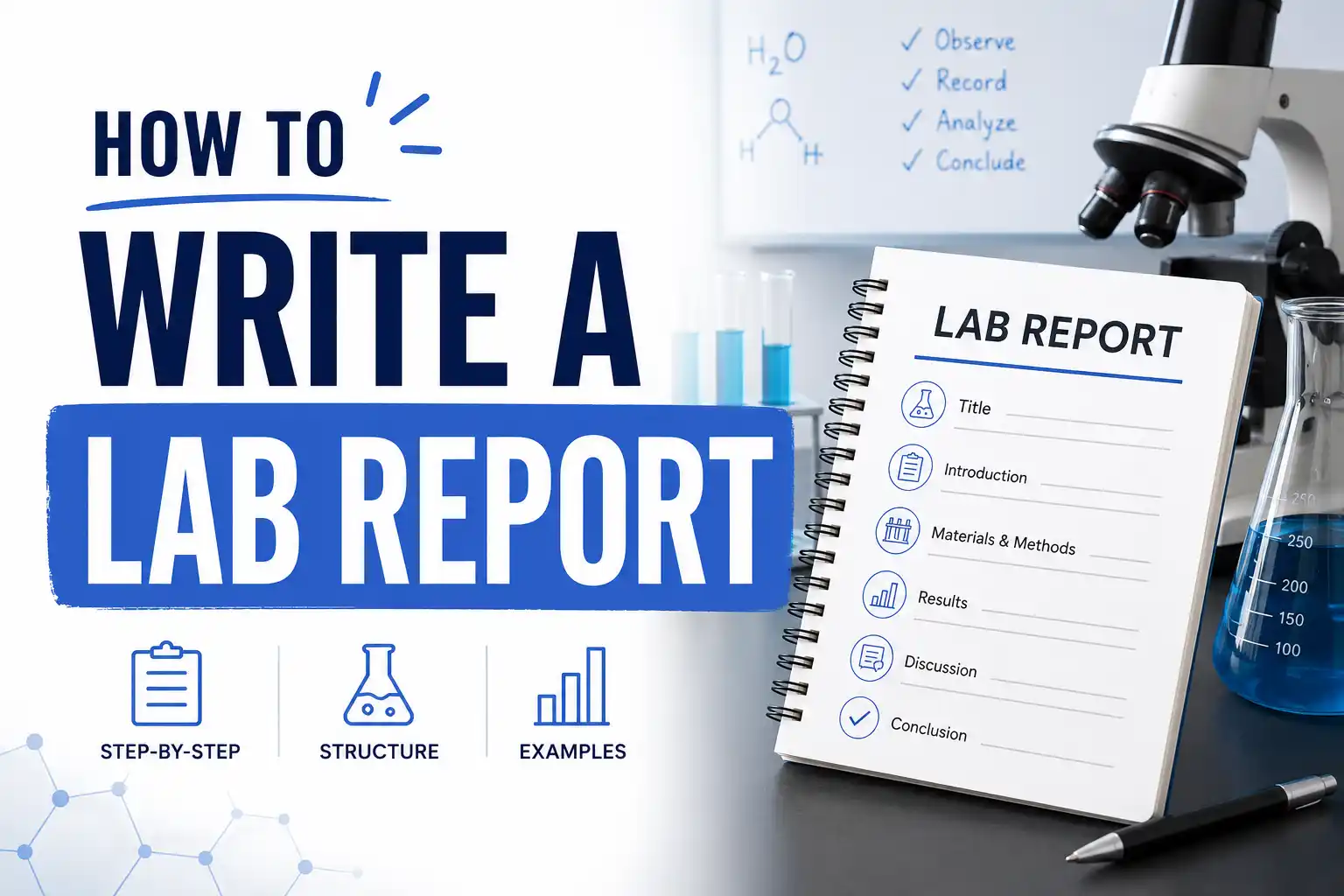
Describes a scientific experiment or investigation. Follows the standard scientific structure: Introduction, Methods, Results, Discussion.
Key trait: Focus on scientific method and results.
Research Report
Presents the findings of a research study. Often used in academia, government, and non-profit organisations. Includes literature review, methodology, findings, and recommendations.
Key trait: Focus on research question, methodology, and findings.
Project Report
Provides an update on a project's progress, including accomplishments, challenges, and next steps. Used to keep stakeholders informed.
Key trait: Focus on project status and milestones.
Incident Report
Documents an incident, accident, or unusual event. Used in safety, security, and compliance contexts. Often includes a timeline of events, causes, and recommendations.
Key trait: Focus on what happened, why, and what to do next.
Financial Report
Presents financial data and analysis. Used in accounting, investing, and corporate governance. Includes balance sheets, income statements, and cash flow statements.
Key trait: Focus on financial performance and metrics.
4 How to Structure a Report
Most reports follow a standard structure that readers expect. Here is the typical structure and what each section should include.
Title Page
Includes the report title, author, date, and organisation. For longer reports, include a reference number and distribution list.
Table of Contents
For reports longer than 10 pages, include a table of contents with page numbers. This helps readers navigate the report.
Executive Summary
An executive summary is a concise overview of the entire report , typically 1–2 pages. It should summarise the purpose, key findings, conclusions, and recommendations. Decision-makers often read only the executive summary, so it must stand alone. Write it last, but place it first.
Introduction
The introduction sets the context. It should explain:
- The purpose and scope of the report
- The background and context
- The research questions or objectives
- The report structure
Methodology
The methodology section explains how you gathered and analysed information. It adds credibility to your findings. Include:
- Data sources and collection methods
- Analytical techniques
- Limitations
Findings / Results
This is the body of the report. Present your findings clearly and logically. Use headings, subheadings, tables, and figures. Do not interpret , just present the facts.
Discussion / Analysis
The discussion interprets the findings and explains their significance. What do the results mean? How do they relate to the research question? What are the implications?
Conclusions
The conclusion summarises the main findings and their significance. It should be brief and focused.
Recommendations
The recommendations section suggests actions based on the findings. Recommendations should be specific, actionable, and justified.
Appendices
Include any supplementary material , raw data, detailed tables, questionnaires, or other supporting documents. Label each appendix clearly.
Standard Report Structure
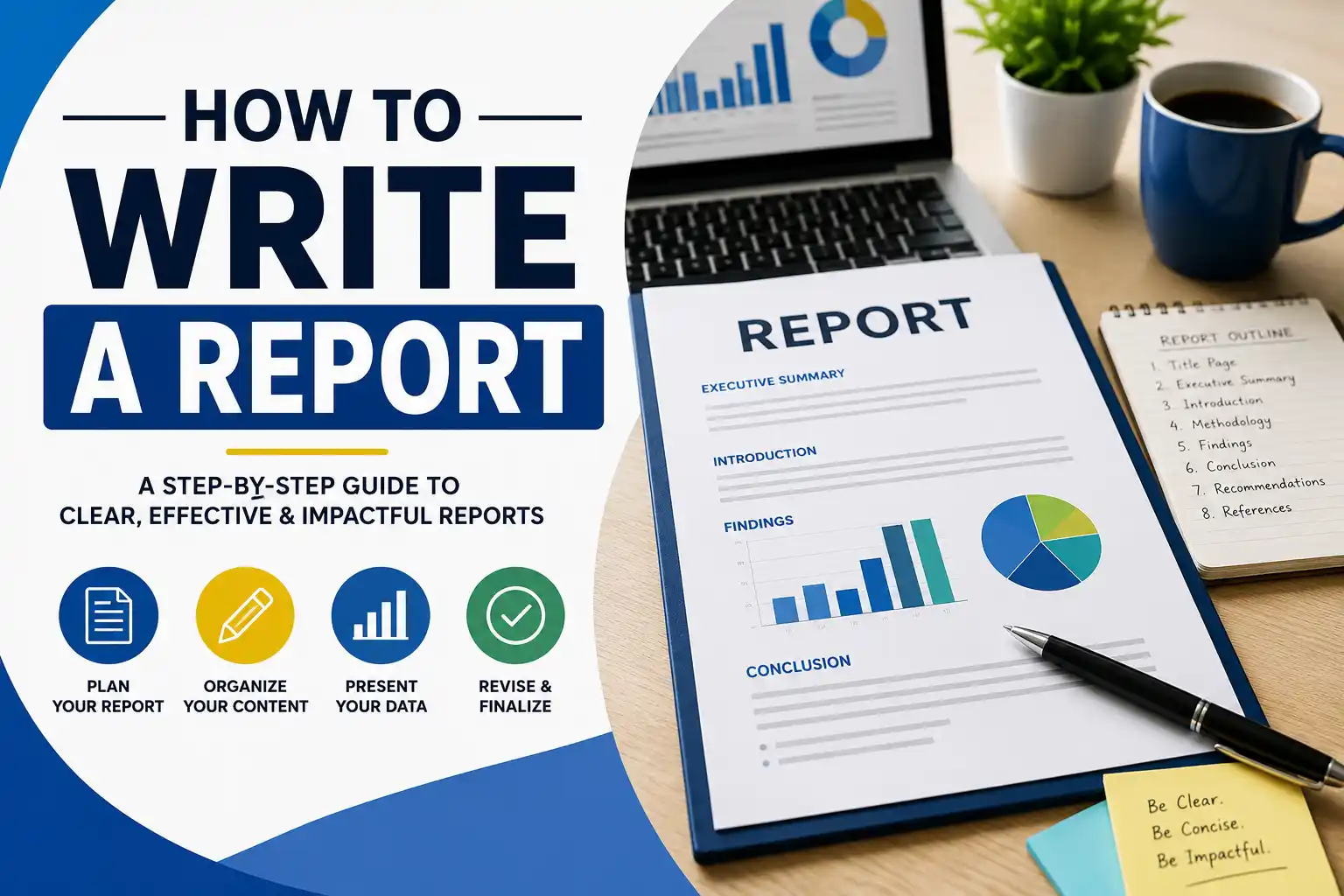
- Title Page
- Table of Contents (for longer reports)
- Executive Summary , written last
- Introduction , purpose, background, scope
- Methodology , how you conducted the research
- Findings , objective presentation of results
- Discussion , interpretation and analysis
- Conclusions , summary of key points
- Recommendations , actionable steps
- Appendices , supplementary material
5 What to Include in Each Section
Here is a detailed breakdown of what to include in each section of your report.
Executive Summary
Include the purpose of the report, the key findings, the main conclusions, and the most important recommendations. Write it in clear, concise language. Assume the reader will read only this section.
Introduction
Start with a brief overview of the topic. State the purpose and scope of the report. Explain the research questions or objectives. Provide any necessary background. Outline the structure of the report.
Methodology
Describe your research methods. What data did you collect? How did you collect it? How did you analyse it? Be transparent about any limitations.
Findings
Present your results in a logical order. Use headings to organise different aspects of the findings. Include tables and figures to illustrate key points. Do not interpret the findings , just present them.
Discussion
Interpret the findings. What do they mean? How do they answer the research question? How do they relate to existing knowledge? Address any limitations or unexpected results.
Conclusions
Summarise the main points of the report. Do not introduce new information. Keep it concise and focused.
Recommendations
Make specific recommendations based on the findings. Explain why each recommendation is appropriate. Prioritise recommendations if there are many.
6 How to Write a Report: Step-by-Step
Here is a step-by-step process for writing a report.
Step 1: Clarify the Purpose and Audience
Why are you writing this report? Who will read it? What do they need to know? Answering these questions will guide your content and tone.
Step 2: Conduct Research
Gather the information you need. This may involve reading documents, conducting interviews, analysing data, or reviewing literature. Keep careful notes of your sources.
Step 3: Create an Outline
Develop a detailed outline following the standard report structure. This will help you organise your ideas and ensure you cover all the essential sections.
Step 4: Write the Body
Start with the methodology, then present the findings, and then the discussion. Write the introduction after you have written the body. Write the executive summary last.
Step 5: Write the Introduction
Write the introduction after you have completed the body. You now know what you are introducing. Keep it clear and focused.
Step 6: Write the Executive Summary
Write the executive summary last. It should summarise the entire report in 1–2 pages. Use clear, concise language.
Step 7: Revise and Proofread
Review your report for clarity, accuracy, and completeness. Check for spelling, grammar, and formatting errors. Ask a colleague to review it.
Sample Report Structure
Title: Annual Marketing Performance Report 2025
Executive Summary: Overview of marketing activities, key metrics (ROI, engagement), major achievements, and recommendations for 2026.
Introduction: Purpose of report, marketing objectives, methodology.
Findings: Campaign performance, channel analysis, customer insights.
Discussion: Interpretation of results, strengths and weaknesses, lessons learned.
Recommendations: Budget allocation, channel strategy, upcoming initiatives.
7 Common Mistakes to Avoid
Even experienced writers make mistakes. Here are the most common errors in report writing and how to avoid them.
Lack of Clear Structure
Writing a report that is disorganised or difficult to navigate. Readers should be able to find what they need quickly.
Fix: Use a standard structure with clear headings and a table of contents.
Too Much Detail
Including excessive information that distracts from the main message.
Fix: Focus on what is relevant to the reader. Use appendices for supplementary material.
Weak Executive Summary
Writing an executive summary that is too long, too vague, or does not stand alone.
Fix: Keep it concise (1–2 pages), summarise the key points, and write it last.
Bias and Subjectivity
Letting personal opinions influence the findings or recommendations.
Fix: Base conclusions and recommendations on evidence. Be objective.
Poor Formatting
Inconsistent fonts, missing headings, or cluttered layouts.
Fix: Use a consistent formatting style. Use headings and bullet points to improve readability.
Not Proofreading
Submitting a report with spelling, grammar, or factual errors.
Fix: Proofread carefully. Ask someone else to review it.
8 How to Revise and Edit Your Report
Revision is where your report goes from good to great. Here is a step-by-step process for revising your report.
Step 1: Check the Structure
Does your report follow the standard structure? Is there a logical flow from one section to the next? If not, reorder or reorganise.
Step 2: Check the Executive Summary
Does the executive summary stand alone? Does it accurately summarise the report? If not, revise it.
Step 3: Check for Consistency
Are your conclusions and recommendations consistent with the findings? Are there any contradictions?
Step 4: Cut Unnecessary Content
Remove any information that does not support the purpose of the report. Be ruthless.
Step 5: Check the Language
Is the language clear, concise, and professional? Have you used jargon that the reader may not understand?
Step 6: Proofread
Check for spelling, grammar, and formatting errors. A polished report reflects well on you and your organisation.
9 Practice Exercises to Improve Your Reports
The best way to get better at writing reports is to practice. Here are some exercises to help you sharpen your skills.
Exercise 1: Write a Short Report
Choose a topic you know well (e.g., a recent project, a research topic). Write a short report (3–5 pages) following the standard structure.
Exercise 2: Analyse a Sample Report
Find a report online or in your organisation. Analyse its structure, content, and style. What works well? What could be improved?
Exercise 3: Write an Executive Summary
Take a report you have written (or a sample report) and write an executive summary for it. Aim for clarity and conciseness.
Exercise 4: Peer Review
Swap reports with a colleague. Review each other's reports for structure, clarity, and completeness.
10 Report Writing Examples
Here are some examples of different types of reports to illustrate how the structure and content vary.
Example 1: Business Report (Annual Marketing Report)
Executive Summary
This report reviews the marketing performance for the fiscal year 2025. Key highlights include a 15% increase in brand awareness, a 20% growth in social media engagement, and a 12% rise in lead generation. The most effective channels were email marketing and paid social. Recommendations for 2026 include increased investment in video content and influencer partnerships.
Introduction
The purpose of this report is to evaluate the effectiveness of marketing activities in 2025 and to provide recommendations for the upcoming year. The report analyses campaign performance, channel efficiency, and customer engagement metrics.
Example 2: Project Status Report
Project: Website Redesign
Date: July 19, 2026
Summary: The project is on schedule and within budget. Key milestones completed: wireframes approved, design phase 80% complete. Next steps: finalise design, begin development. Risks: potential delays in content delivery.
Example 3: Lab Report (Scientific)
Results
The experiment showed a 25% increase in plant growth when exposed to 12 hours of light per day compared to 8 hours. The mean height of plants in the 12-hour group was 15.2 cm (SD=1.8), while the 8-hour group averaged 12.1 cm (SD=1.5). A t-test revealed a significant difference (p < 0.05).
Final Thoughts
Writing a report is an essential professional skill. A well-structured, clear report can inform decisions, solve problems, and drive action. It is a valuable tool for communication and accountability.
Remember that a report is not just a collection of information , it is a communication tool designed for a specific purpose and audience. Keep your reader in mind, be clear and concise, and use a logical structure to guide them through your findings.
Keep these principles in mind as you write:
- Know your purpose and audience. Tailor your report to their needs.
- Use a clear structure. Follow the standard report format.
- Be objective and factual. Base conclusions on evidence.
- Write for scannability. Use headings, bullet points, and visual aids.
- Revise carefully. A polished report demonstrates professionalism.
Report writing is a skill that improves with practice. Each report you write will be better than the last. With time and effort, you will become a confident and effective report writer.
Now go write a report that makes an impact.