How to Write a Book Review: The Complete Guide with Examples
You have just finished a book that moved you, challenged you, or made you think. You want to share your thoughts with the world. But when you sit down to write a review, you are not sure where to start. What should you include? How do you structure it? How do you make it insightful without spoiling the book?
You are not alone. Writing a book review is a skill that takes practice to master. But it is also one of the most rewarding forms of writing. A good review helps other readers decide whether to pick up a book, deepens your own understanding of what you have read, and contributes to the broader conversation about literature.
This guide will teach you everything you need to know about how to write a book review that is insightful, engaging, and useful. We will cover the structure, the essential elements, the tone, and the common mistakes to avoid. By the end, you will have the tools to write reviews that readers will trust and enjoy.
Book Review at a Glance
1 What Is a Book Review and Why Does It Matter?
A book review is a critical evaluation of a book that goes beyond simply summarising its plot. It offers an informed opinion on the book's strengths and weaknesses, its themes, its characters, and its overall contribution to its genre or field. A good book review helps readers decide whether to read the book and provides deeper insight into its meaning and significance.
Book reviews matter because they are a vital part of literary culture. They help readers discover new books, guide purchasing decisions, and create a community of readers who share their thoughts and perspectives. For writers, reviews provide feedback and validation. For publishers, reviews generate publicity and sales.
Writing a book review is also a valuable intellectual exercise. It forces you to think critically about what you have read, to articulate your thoughts clearly, and to engage with the broader conversation around a book. It deepens your understanding and makes you a more thoughtful reader.
Guides Readers
Reviews help readers decide whether a book is worth their time and money. They provide honest, informed opinions.
Supports Authors
Reviews generate buzz and visibility for books. A thoughtful review can help an author reach new readers.
Builds Community
Reviews create a conversation among readers. They connect people who share a love of books.
Deepens Understanding
Writing a review forces you to think critically about what you have read. It deepens your appreciation of the book.
2 The Fundamentals of Writing a Book Review
Before you start writing, it is essential to understand the core principles that guide effective book reviews.
Read the Book Carefully
This may seem obvious, but it is the most important step. Read the book with attention and intention. Take notes as you read , mark passages that stand out, note your reactions, and record questions that arise. A good review is built on a careful reading.
Know Your Audience
Who are you writing for? A review for a literary journal will be different from a review for a blog or a social media post. Consider what your readers want to know and tailor your review accordingly.
Be Honest and Fair
A good review is honest but fair. You do not have to like every book you review, but you should be respectful of the author's work. Support your opinions with evidence from the text. Avoid personal attacks or snarky commentary.
Balance Summary and Analysis
A book review should include both summary and analysis. Summarise the plot enough to give context, but do not give away major spoilers. Focus your energy on analysing the book's themes, characters, style, and significance.
The Purpose of a Book Review
As critic and author John Updike once said, "The purpose of a book review is to help readers decide whether to read the book and to provide insight into its meaning." Keep this dual purpose in mind as you write. You are both a guide and a critic.
3 How to Structure a Book Review
A well-structured book review is easy to read and follow. Here is a standard structure that works for most reviews.
Introduction
The introduction should grab the reader's attention and provide essential context. Include:
- The book's title and author
- A hook that draws the reader in , a question, a provocative statement, or a brief anecdote
- A brief overview of the book's subject or genre
- Your thesis or overall assessment of the book
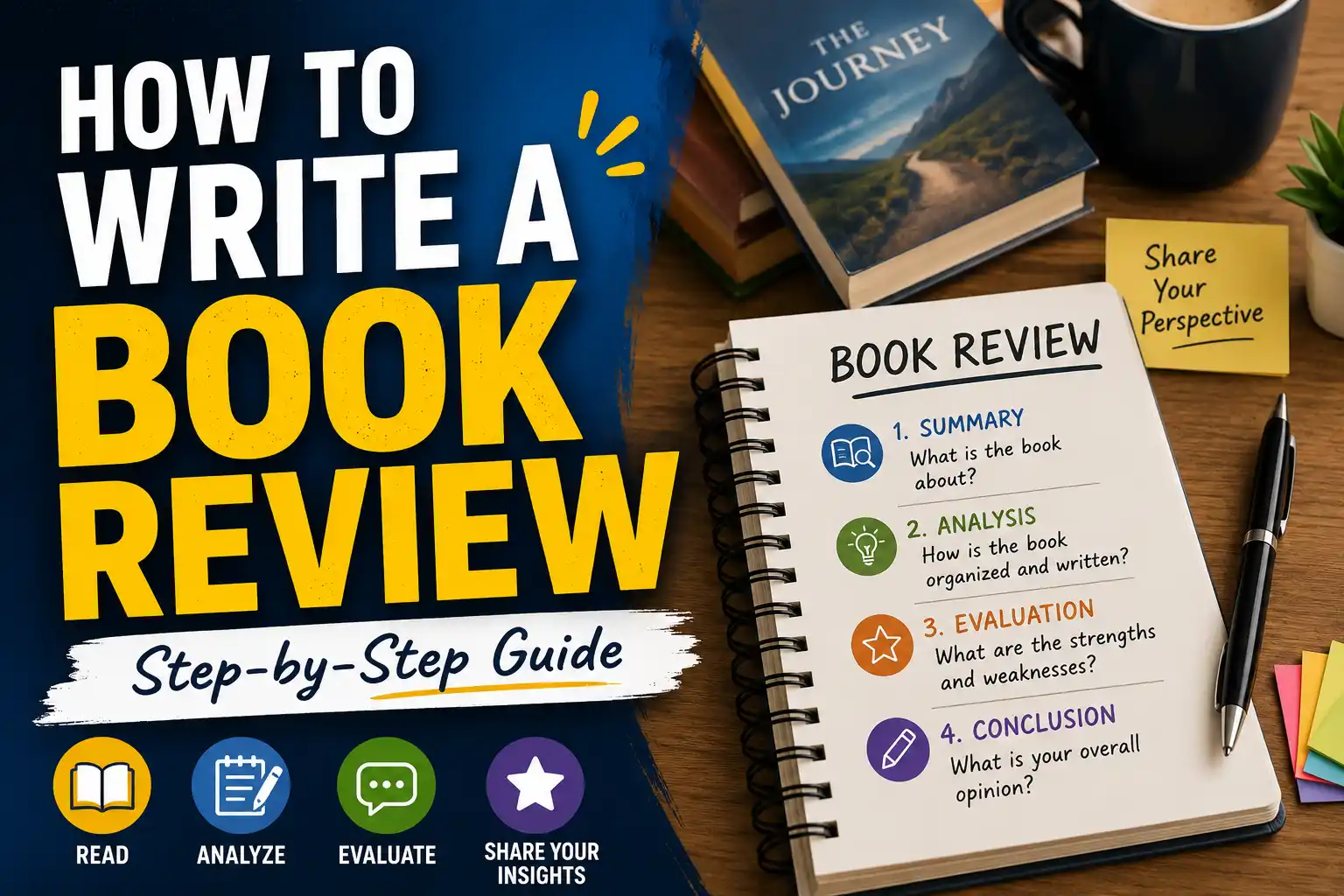
Summary
Provide a brief summary of the book's plot or main argument. Keep it concise , no more than a few paragraphs. Focus on the essential elements that will help the reader understand your analysis. Avoid spoilers unless they are essential to your argument.
Analysis and Critique
This is the heart of your review. Analyse the book's strengths and weaknesses. Consider:
- Characters: Are they believable? Are they well-developed?
- Plot: Is it engaging? Does it make sense? Is it original?
- Writing style: Is the prose effective? Is it beautiful, sharp, or unique?
- Themes: What is the book about on a deeper level? What ideas does it explore?
- Pacing: Does the book drag? Does it keep you turning pages?
Recommendation
End with a clear recommendation. Who would enjoy this book? What kind of reader would appreciate it? Be specific. For example: "Fans of literary fiction and slow-burning character studies will love this book."
Sample Book Review Structure
- Introduction: Hook, book details, thesis
- Summary: Brief plot or argument overview
- Analysis: Characters, themes, style, strengths, weaknesses
- Recommendation: Who should read this book?
4 What to Include in a Book Review
Every book review should include certain essential elements. Here is what to include, section by section.
Book Details
Include the basic information about the book: title, author, publisher, publication date, and page count. This is useful for readers who want to find the book themselves.
A Compelling Opening Hook
Your opening should grab the reader's attention. Start with a question, a provocative statement, a vivid image, or a personal anecdote. Make the reader want to keep reading.
A Balanced Summary
Summarise the book's plot or argument without giving away major spoilers. Give readers enough context to understand your analysis, but leave them with reasons to read the book themselves.
Thoughtful Analysis
This is where you show your critical thinking. Analyse the book's strengths and weaknesses. Use specific examples from the text to support your points. This is what separates a good review from a simple summary.
A Clear Recommendation
End with a clear recommendation. Who would enjoy this book? Who would not? Be specific and helpful.
Your Rating (Optional)
If you are writing for a platform that uses ratings (like Goodreads or Amazon), include a star rating. Be consistent in how you rate books.
5 How to Write a Book Review: Step-by-Step
Here is a step-by-step process for writing a book review.
Step 1: Read the Book with Intent
Read the book carefully. Take notes on characters, themes, and passages that stand out. Mark quotes that you might want to use in your review. Think about your overall impression as you read.
Step 2: Reflect on Your Reaction
After you finish reading, take time to reflect. What was your overall impression? What did you like? What did you not like? What questions does the book raise? What themes stand out?
Step 3: Write a Thesis Statement
Develop a clear thesis statement that captures your overall assessment of the book. For example: "The novel is a masterful exploration of grief and memory, but its pacing is uneven." Your thesis will guide the rest of your review.
Step 4: Write the Introduction
Write a compelling introduction that hooks the reader and presents your thesis. Include the book's title and author.
Step 5: Write the Summary
Write a brief summary of the book. Keep it concise and avoid spoilers. Focus on the essential elements that will support your analysis.
Step 6: Write the Analysis
This is the heart of your review. Analyse the book's strengths and weaknesses. Use specific examples from the text. Support your claims with evidence.
Step 7: Write the Recommendation
End with a clear recommendation. Who would enjoy this book? Be specific.
Step 8: Revise and Proofread
Revise your review for clarity, flow, and accuracy. Proofread carefully for spelling, grammar, and punctuation errors.
Sample Book Review
Title: The Ministry of Time
Author: Kaliane Bradley
In this dazzling debut novel, Kaliane Bradley combines time travel, espionage, and romance into a story that is as intellectually thrilling as it is emotionally resonant. The premise , a government experiment that brings historical figures to the present , allows Bradley to explore questions of identity, belonging, and legacy. The pacing is relentless, the characters are vividly drawn, and the prose is sharp and elegant. This is a book that will appeal to readers of literary fiction and speculative fiction alike. Highly recommended.
6 Common Book Review Mistakes to Avoid
Even experienced reviewers make mistakes. Here are the most common errors and how to avoid them.
Too Much Plot Summary
Spending most of the review summarising the plot without offering any analysis or critique.
Fix: Keep the summary brief. Focus your energy on analysis and evaluation.
Spoilers
Revealing major plot twists or the ending without warning.
Fix: Avoid spoilers unless they are essential to your argument. If you must include them, give a clear spoiler warning.
Being Too Vague
Making broad, unsupported claims like "The characters are great" or "The writing is beautiful."
Fix: Support your claims with specific examples from the text. Show, don't tell.
Being Too Negative or Too Positive
Writing a review that is purely negative or purely positive without any nuance.
Fix: Be balanced. Acknowledge both strengths and weaknesses. A thoughtful, nuanced review is more credible.
Ignoring the Book's Genre or Audience
Criticising a book for not being something it was never trying to be.
Fix: Evaluate the book on its own terms. Consider its genre, target audience, and authorial intent.
Making It About Yourself
Focusing too much on your personal reaction without analysing the book itself.
Fix: Your personal response is valuable, but keep the focus on the book. Use your reactions to illuminate your analysis.
7 How to Write a Book Review for Different Platforms
The format and tone of your review may vary depending on the platform you are writing for. Here are some considerations.
Goodreads / Amazon
Reviews on these platforms are often short and to the point. Readers want to know quickly whether a book is worth their time. Focus on your overall impression and a few key strengths or weaknesses. Include a star rating.
Key trait: Concise, practical, and rating-focused.
Blog / Personal Website
Blog reviews can be longer and more personal. You have more space to explore themes, discuss characters in depth, and share your personal reaction. You can also include images, quotes, and links.
Key trait: In-depth, personal, and visually engaging.
Literary Journal / Publication
Reviews for literary journals are formal and analytical. They require a high level of critical rigour and are often written for an audience of fellow writers, critics, and serious readers.
Key trait: Formal, rigorous, and literary.
Social Media (Instagram, TikTok, Twitter)
Social media reviews are short and visual. On platforms like Instagram and TikTok, the focus is on the book cover and a brief, punchy review. Use hashtags and engaging visuals to attract attention.
Key trait: Short, visual, and shareable.
8 How to Revise Your Book Review
Revision is where your review goes from good to great. Here is a step-by-step process for revising your book review.
Step 1: Take a Break
Step away from your review for a few hours or a day. This gives you fresh eyes and helps you see your work more objectively.
Step 2: Read It Aloud
Read your review aloud. Does it flow smoothly? Are there any awkward sentences? Reading aloud helps you catch issues you might miss when reading silently.
Step 3: Check the Structure
Does your review have a clear introduction, summary, analysis, and recommendation? Does it flow logically from one section to the next?
Step 4: Check for Balance
Is your review balanced? Have you included both strengths and weaknesses? Is your analysis supported by evidence from the text?
Step 5: Check for Clarity
Is your review easy to read and understand? Have you avoided jargon and unclear language? Could someone who has not read the book follow your argument?
Step 6: Proofread
Check for spelling, grammar, and punctuation errors. A polished review demonstrates professionalism and attention to detail.
9 Practice Exercises to Improve Your Book Reviews
The best way to get better at writing book reviews is to practice. Here are some exercises to help you sharpen your skills.
Exercise 1: Write a Short Review
Read a short story or a novella. Write a 200-word review that includes a summary, analysis, and recommendation. Practice being concise.
Exercise 2: Analyse a Published Review
Find a published book review in a newspaper or literary journal. Analyse its structure, tone, and arguments. What makes it effective?
Exercise 3: Write a Review in a Different Style
Take the same book and write two different reviews , one for Goodreads and one for a literary journal. Notice how the tone and content change.
Exercise 4: Peer Review Swap
Swap book reviews with a friend or fellow reader. Provide honest feedback on what works and what could be improved.
10 Book Review Examples
Here are some sample book reviews to illustrate different styles and approaches.
Example 1: Short Review (Goodreads Style)
"The Ministry of Time by Kaliane Bradley is a stunning debut that blends time travel, espionage, and romance into a story that is as intellectually thrilling as it is emotionally resonant. The premise , a government experiment that brings historical figures to the present , allows Bradley to explore questions of identity, belonging, and legacy. The pacing is relentless, the characters are vividly drawn, and the prose is sharp and elegant. Highly recommended for fans of literary fiction and speculative fiction alike."
★★★★☆
Example 2: Medium-Length Review (Blog Style)
"If you are looking for a book that will keep you up all night, The Ministry of Time is it. Kaliane Bradley's debut novel is a masterclass in pacing and tension. The story follows a government employee who becomes part of a secret experiment that brings historical figures to the present. What follows is a thrilling exploration of time, identity, and the cost of progress.
Bradley's prose is sharp and elegant, and her characters are richly developed. The novel raises profound questions about what it means to belong and how we are shaped by the past. At the same time, it is a propulsive, page-turning thriller that will satisfy readers of genre fiction.
The only drawback is that the ending feels slightly rushed. After such a careful build-up, the resolution comes too quickly. But overall, this is a remarkable debut that announces a major new talent."
Example 3: In-Depth Review (Literary Journal Style)
"Kaliane Bradley's The Ministry of Time is a work of speculative fiction that interrogates the very nature of history, identity, and progress. The novel's central conceit , a government experiment that transports historical figures to the present , serves as a vehicle for a profound meditation on how the past shapes us and how we shape the past.
Bradley's prose is meticulously crafted, balancing a taut narrative tension with moments of lyrical beauty. The characters are complex and fully realised, each grappling with their own relationship to time and history. The novel is both a thrilling page-turner and a work of serious literary ambition.
While the novel's pacing is relentless, the final act feels somewhat rushed, as if Bradley was eager to reach the resolution. Nevertheless, The Ministry of Time is a remarkable achievement , a novel that will linger in the reader's mind long after the final page."
Final Thoughts
Writing a book review is a rewarding practice that deepens your reading experience and contributes to the literary community. It is an opportunity to share your insights, help other readers, and engage with the broader conversation about books.
Remember that a good book review is not just about whether you liked the book. It is about why you liked or did not like it, and about helping other readers make informed decisions. Be honest, be thoughtful, and be fair.
Keep these principles in mind as you write:
- Read carefully. A good review is built on a careful reading.
- Balance summary and analysis. Summarise just enough, and focus on critique.
- Support your claims. Use specific examples from the text.
- Be honest and fair. Respect the author's work.
- End with a clear recommendation. Who should read this book?
Writing a book review is not always easy, but it is always worthwhile. Each review you write makes you a more thoughtful reader and a better writer. The books you read and review will stay with you, and your words will help others discover the joy of reading.
Now go write a book review that helps someone find their next great read.