How to Write an Essay: The Complete Guide with Examples
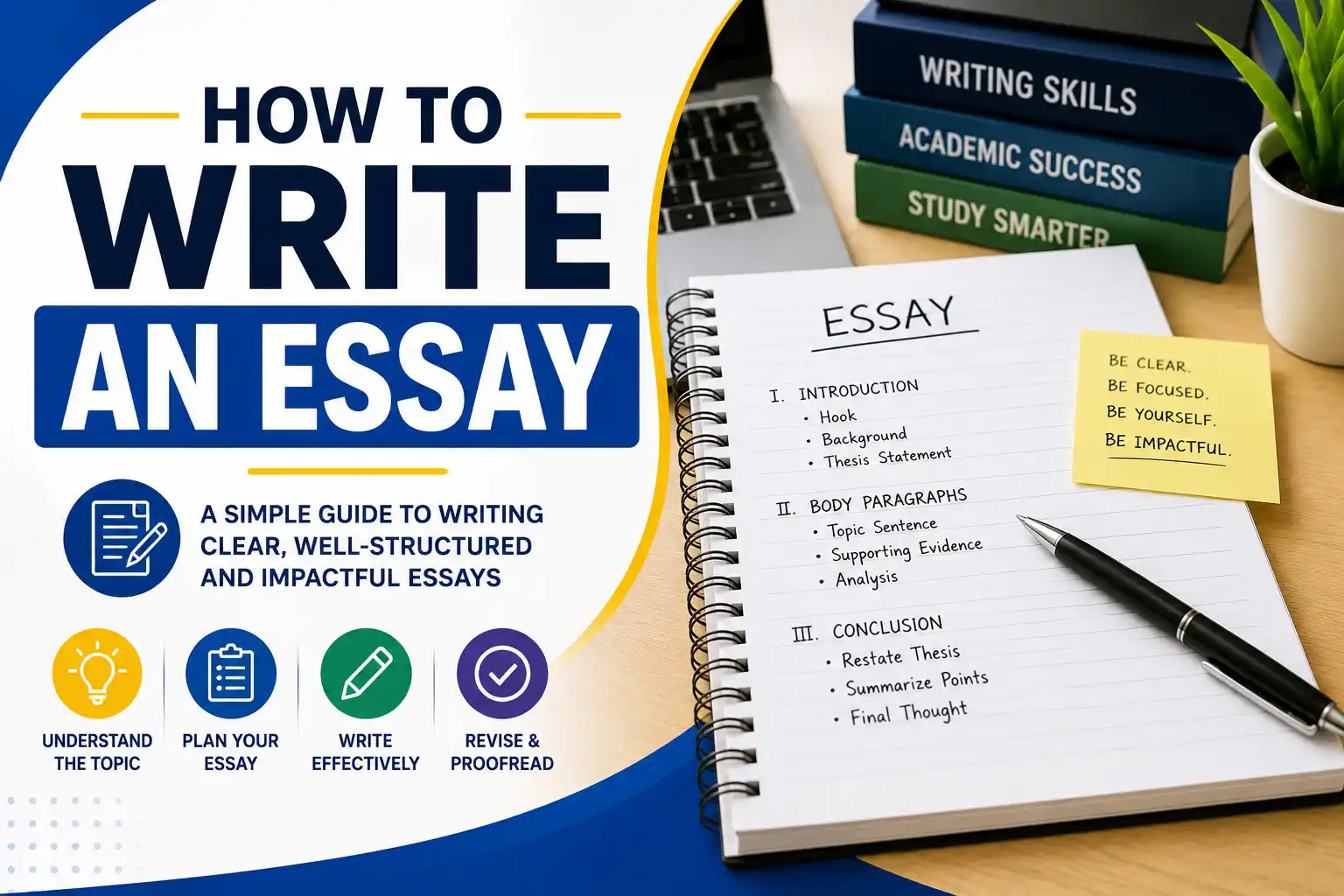
You have an essay assignment. The deadline is looming. You stare at the blank page, wondering where to start. You have ideas, but you are not sure how to organise them. You worry your essay will not be good enough.
You are not alone. Writing an essay is a skill that takes practice. But it is also a skill that can be learned. With the right approach, you can write essays that are clear, persuasive, and well-structured.
This guide will teach you everything you need to know about how to write an essay , from understanding the assignment to submitting your final draft. We will cover the structure, the writing process, the techniques, and the common mistakes to avoid. By the end, you will have the tools to write essays that impress your instructors and achieve your goals.
Essay Writing at a Glance
1 What Is an Essay and Why Does It Matter?
An essay is a formal piece of writing that presents and defends a coherent argument or explores a specific topic in depth. It is one of the most common forms of academic writing, assigned in schools, universities, and professional settings.
Essays matter because they are a test of your thinking. A well-written essay demonstrates your ability to analyse a topic, develop a thesis, support your arguments with evidence, and communicate clearly. These skills are valuable in any field , from law to science to business.
Writing an essay is also an act of discovery. It is a way to clarify your own thinking, to understand a topic more deeply, and to engage with the ideas of others. Through writing, you learn to think more critically and express yourself more effectively.
Develops Critical Thinking
Essay writing forces you to analyse, evaluate, and synthesise information. It sharpens your ability to think logically and critically.
Builds Communication Skills
Writing essays improves your ability to communicate complex ideas clearly and persuasively , a skill that is valuable in any career.
Demonstrates Understanding
An essay shows that you understand a topic deeply and can engage with it in a meaningful way. It is a measure of your knowledge and intellectual maturity.
Clarifies Thinking
The act of writing forces you to organise your thoughts and make your ideas concrete. Writing is a tool for thinking , not just for communicating.
2 The Fundamentals of Essay Writing
Before you start writing, it is essential to understand the core principles that guide effective essay writing.
Start with a Strong Thesis
Your thesis statement is the central argument of your essay. It should be clear, specific, and arguable. Every paragraph in your essay should support or develop this thesis. A weak thesis is the most common reason essays fail.
Structure Matters
A well-structured essay is easy to read and follow. The standard structure is introduction, body paragraphs, and conclusion. Each part has a specific purpose, and they work together to create a coherent whole.
Support Your Claims with Evidence
In academic writing, claims must be backed by evidence. This means citing sources, using examples, and referencing scholarly work. Avoid making unsupported assertions.
The "So What?" Test
For every claim you make in your essay, ask yourself: "So what?" Why does this matter? How does it support your thesis? If you cannot answer that question, revise or remove the statement. Every sentence should contribute to your argument.
3 The Essay Structure: Introduction, Body, Conclusion
A well-structured essay follows a clear, logical format. Here is the essential structure and what each section should include.
Introduction
Your introduction sets the stage for your essay. It should:
- Hook the reader: Start with a compelling opening , a question, a surprising fact, a vivid image, or a bold statement.
- Provide context: Give the reader the background they need to understand your topic.
- State your thesis: Present your central argument clearly and concisely.
- Preview your structure: Briefly outline the main points you will cover.
Body Paragraphs
The body is the heart of your essay. Each paragraph should focus on a single main idea that supports your thesis. A typical body paragraph follows this structure:
- Topic sentence: States the main idea of the paragraph.
- Evidence: Provides supporting examples, facts, or quotes.
- Analysis: Explains how the evidence supports your argument.
- Link: Connects back to your thesis or transitions to the next paragraph.
Conclusion
Your conclusion ties everything together. It should:
- Restate your thesis: In different words, remind the reader of your central argument.
- Summarise your main points: Briefly recap the key evidence and arguments you presented.
- Leave a final impression: End with a thought-provoking statement, a call to action, or a broader implication.
The PEEL Paragraph Structure
- Point: State your main idea.
- Evidence: Provide supporting evidence.
- Explanation: Explain how the evidence supports your point.
- Link: Connect back to your thesis or transition to the next point.
4 How to Develop a Strong Thesis Statement
Your thesis statement is the foundation of your essay. Here is how to develop a strong one.
Make It Specific
A strong thesis is specific and focused. Avoid vague statements like "Climate change is bad." Instead, try: "The implementation of carbon pricing mechanisms has been the most effective policy tool in reducing greenhouse gas emissions in developed nations."
Make It Arguable
Your thesis should be debatable. It should present a position that someone could reasonably disagree with. If everyone agrees with your thesis, it is not an argument , it is a fact.
Make It Supportable
Your thesis should be supportable with evidence. You must be able to find sources and examples that back up your claims. If you cannot find evidence for your thesis, you may need to revise it.
Weak Thesis
"Social media has both positive and negative effects on society."
Too vague and not arguable.
Strong Thesis
"While social media has connected people globally, its negative impact on mental health, particularly among adolescents, outweighs its benefits."
Specific, arguable, and supportable.
5 How to Write an Effective Introduction
Your introduction is the first impression your reader will have of your essay. Here is how to write an effective one.
Start with a Hook
Grab the reader's attention with a hook. This could be a surprising statistic, a provocative question, a vivid anecdote, or a bold statement. The hook should be relevant to your topic and make the reader want to continue reading.
Provide Context
Give the reader the background they need to understand your argument. What is the topic? Why does it matter? What is the current state of the debate? Provide enough context to orient the reader without overwhelming them.
State Your Thesis
End your introduction with your thesis statement. This tells the reader exactly what you will argue and prepares them for the rest of the essay. Make sure your thesis is clear and direct.
Sample Introduction
"Over 70% of adolescents report experiencing stress related to academic pressure. As mental health concerns among young people continue to rise, schools are under increasing pressure to address the root causes of student anxiety. While some argue that increased academic standards are necessary for student success, the evidence suggests that the current emphasis on high-stakes testing is contributing to a mental health crisis. This essay argues that schools must prioritise student well-being over standardised test scores to create a healthier and more effective learning environment."
6 How to Write Strong Body Paragraphs
Body paragraphs are the building blocks of your essay. Here is how to write strong ones.
Start with a Clear Topic Sentence
Each paragraph should begin with a topic sentence that states the main idea of the paragraph. This tells the reader what to expect and keeps your argument focused.
Provide Evidence and Examples
Support your topic sentence with evidence. This could be facts, statistics, quotes from experts, or specific examples. Make sure your evidence is relevant and credible.
Explain and Analyse
Do not just present evidence , explain it. What does the evidence show? How does it support your argument? This is where you demonstrate your critical thinking skills.
Use Transitions
Use transitions between paragraphs and between sentences to create a smooth, logical flow. Transitions help the reader follow your argument and see the connections between your ideas.
Sample Body Paragraph
"One of the most significant contributors to student anxiety is the pressure to achieve high test scores. According to a study by the American Psychological Association, 60% of high school students report that standardised testing is a major source of stress. This pressure is compounded by the fact that test scores often determine admission to competitive universities, creating a high-stakes environment that leaves little room for failure. When students feel that their entire future depends on a single exam, it is not surprising that anxiety levels soar. This suggests that reducing the emphasis on standardised testing could significantly improve student well-being."
7 How to Write a Powerful Conclusion
Your conclusion is your final opportunity to make an impression. Here is how to write a powerful one.
Restate Your Thesis
Remind the reader of your thesis statement, but do not just copy it word for word. Restate it in different words, reinforcing your argument.
Summarise Your Main Points
Briefly recap the key points you have made in your essay. This reinforces your argument and helps the reader remember the most important takeaways.
Leave a Lasting Impression
End with a thought-provoking statement. This could be a call to action, a broader implication, a question for the reader to consider, or a forward-looking prediction. Your conclusion should feel like a natural end to your argument, not a sudden stop.
Sample Conclusion
"The evidence is clear: the current emphasis on high-stakes testing is harming student mental health without significantly improving educational outcomes. Schools must shift their focus from standardised test scores to student well-being by implementing more holistic assessment methods and providing better mental health support. The health and happiness of our students should not be sacrificed in the name of academic achievement. It is time to redefine what success looks like in education , and to put the well-being of students at the centre of the conversation."
8 Common Essay Writing Mistakes to Avoid
Even experienced writers make mistakes. Here are the most common errors and how to avoid them.
Weak or Missing Thesis
Starting an essay without a clear, specific thesis statement. The reader does not know what you are arguing.
Fix: Develop a strong, arguable thesis before you start writing. Make sure every part of your essay supports it.
Lack of Structure
Writing without a clear structure. Ideas are jumbled, paragraphs are disorganised, and the essay is hard to follow.
Fix: Create an outline before you write. Follow the introduction-body-conclusion structure.
Poor Evidence
Making claims without supporting them with evidence, or using weak, unreliable sources.
Fix: Support every claim with credible evidence. Use scholarly sources wherever possible.
Wordiness
Using more words than necessary. The writing feels bloated and slow.
Fix: Cut unnecessary words. Be concise. Every word should earn its place.
Not Revising
Submitting your first draft without revision. First drafts are rarely strong.
Fix: Revise. Then revise again. Great essays are the result of careful rewriting.
Poor Proofreading
Submitting an essay with spelling, grammar, or punctuation errors. This undermines your credibility.
Fix: Proofread carefully. Read it aloud. Ask someone else to review it.
9 How to Revise Your Essay
Revision is where your essay goes from good to great. Here is a step-by-step process for revising your essay.
Step 1: Take a Break
Step away from your essay for a few hours or a day. This gives you fresh eyes and helps you see your work more objectively.
Step 2: Read It Aloud
Read your essay aloud. Does it sound natural? Are there any awkward phrases? Reading aloud helps you catch issues you might miss when reading silently.
Step 3: Check the Structure
Does your essay follow the introduction-body-conclusion structure? Does each paragraph have a clear topic sentence? Does the argument flow logically?
Step 4: Strengthen Your Argument
Is your thesis clear? Is every claim supported by evidence? Are your conclusions warranted by your evidence?
Step 5: Cut the Clutter
Cut unnecessary words and phrases. Be ruthless. Shorten sentences where possible. Remove anything that does not support your thesis.
Step 6: Get Feedback
Share your essay with a peer or instructor. Ask for honest feedback on clarity, argument, and structure. Use their insights to improve your essay.
10 Practice Exercises to Improve Your Essay Writing
The best way to get better at writing essays is to practice. Here are some exercises to help you sharpen your skills.
Exercise 1: Write a Thesis Statement
Choose a topic and write three different thesis statements. Make each one increasingly specific and arguable. Practice narrowing your focus.
Exercise 2: Write an Outline
Create a detailed outline for an essay on a topic of your choice. Include your thesis, topic sentences for each paragraph, and key pieces of evidence.
Exercise 3: The "Cut 50%" Challenge
Take a piece of your own writing and try to cut 50% of the words without losing the meaning. This forces you to be concise and eliminate clutter.
Exercise 4: Peer Review
Swap essays with a classmate. Provide constructive feedback on structure, argument, evidence, and clarity. Learn from reviewing others' work as well as receiving feedback.
Final Thoughts
Writing an essay is a challenging but rewarding skill. It is an opportunity to explore a topic in depth, to clarify your own thinking, and to communicate your ideas to others. With practice and persistence, you can become a confident and effective essay writer.
Remember that a great essay is not just about following a formula. It is about engaging with ideas, making a thoughtful argument, and communicating clearly. Each essay you write is an opportunity to improve your thinking and your writing.
Keep these principles in mind as you write:
- Start with a strong thesis. Your argument is the backbone of your essay.
- Follow the structure. Introduction, body, conclusion , each part has a purpose.
- Support every claim with evidence. Show, don't just tell.
- Be clear and concise. Cut unnecessary words and phrases.
- Revise thoroughly. Great essays are the result of careful rewriting.
Essay writing is a skill that can be learned and improved. With practice, patience, and persistence, you will become a better writer and a clearer thinker. The words are waiting for you.
Now go write an essay that makes an impact.