How to Write an Introduction: The Complete Guide with Examples
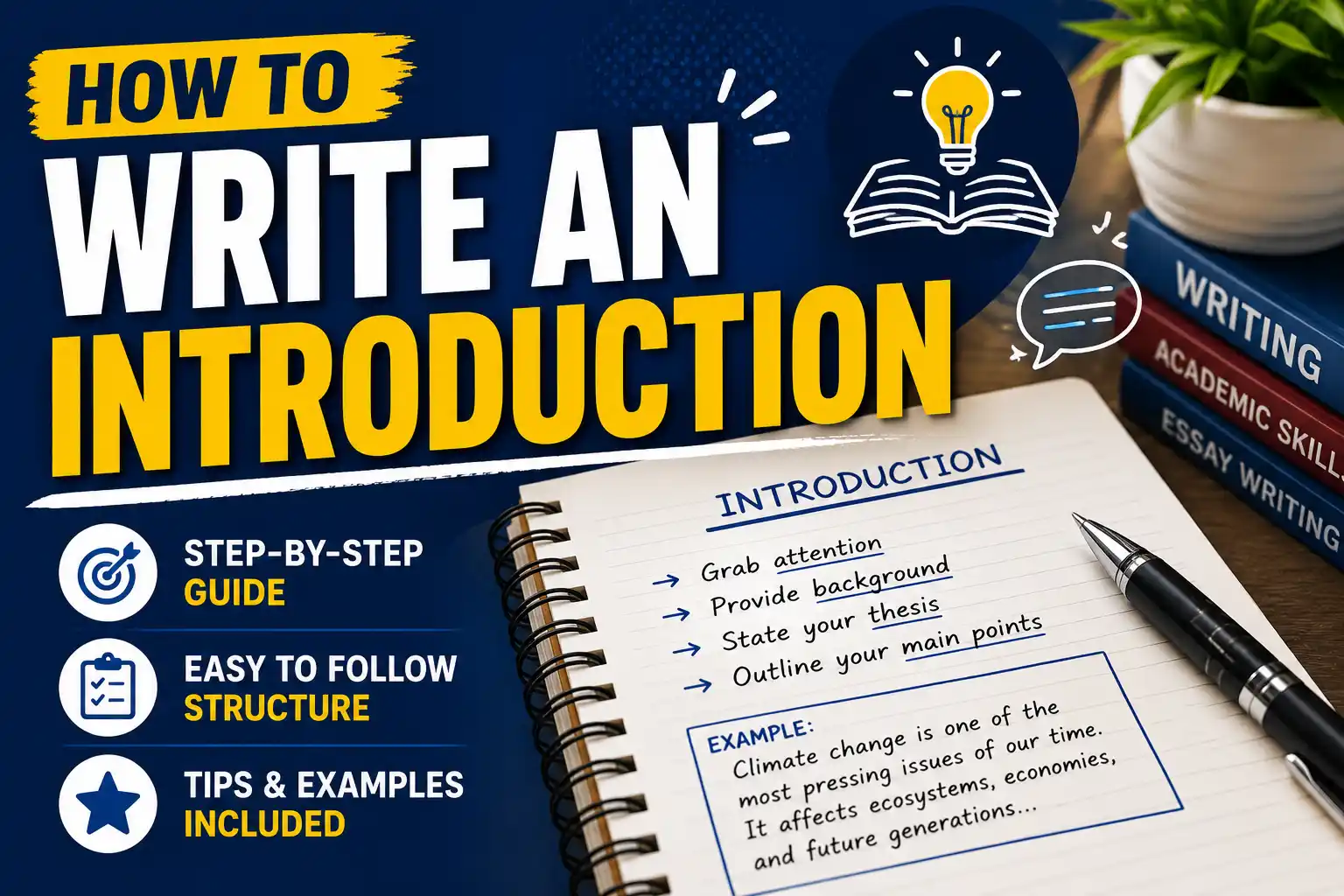
You stare at the blank page. You have your thesis, your arguments, and your evidence. But you cannot seem to write the first sentence. The introduction feels like the hardest part , and it is. It is the first impression, the hook, the promise of what is to come.
You are not alone. Writing an introduction is one of the most challenging parts of any writing project. But it is also one of the most important. A strong introduction grabs the reader's attention, provides context, and sets up your argument. It is the gateway to your entire piece.
This guide will teach you everything you need to know about how to write an introduction that captivates readers and sets up your argument effectively. We will cover the essential components, the techniques, the common mistakes to avoid, and plenty of examples. By the end, you will have the tools to write introductions that hook readers from the very first sentence.
Introduction Writing at a Glance
1 What Is an Introduction and Why Does It Matter?
An introduction is the opening section of a piece of writing. It serves as the reader's first encounter with your work, establishing the tone, context, and direction of what follows. In academic writing, the introduction typically includes a hook, background information, and a thesis statement.
Your introduction matters because it makes a first impression. As the saying goes, you never get a second chance to make a first impression. A strong introduction signals to the reader that your writing is worth their time. It shows that you have a clear purpose and that you know where you are going.
Beyond first impressions, the introduction also does important rhetorical work. It establishes your credibility, frames the conversation, and gives the reader a roadmap for what is to come. A good introduction = new information + ideas that everyone may not agree with. It pulls the reader in by offering something fresh and thought-provoking.
Hooks the Reader
A strong introduction grabs the reader's attention and makes them want to keep reading.
Provides Context
It gives the reader the background information they need to understand your argument.
States Your Thesis
It presents your main argument clearly and concisely.
Outlines Your Structure
It provides a roadmap for the reader, showing how your paper will be organised.
2 The Fundamentals of Writing an Introduction
Before you start writing, it is essential to understand the core components that make up an effective introduction.
The Hook
The hook is the opening sentence or sentences that grab the reader's attention. It should be interesting, specific, and relevant to your topic. A good hook makes the reader want to continue reading. There are many types of hooks: a surprising fact, a vivid anecdote, a provocative question, or a compelling quotation.
Background Information
After the hook, you need to provide background information that gives the reader context. This section should introduce the topic, explain why it matters, and narrow the focus toward your specific argument. Think of it as a funnel: you start broad and gradually become more specific.
Thesis Statement
The thesis statement is the most important part of your introduction. It is a clear, concise statement of your main argument. A good thesis is specific, debatable, and supported by evidence. It should appear near the end of the introduction, after you have built up to it.
The Funnel Structure
The introduction follows a funnel structure: you start with a broad hook that captures attention, then narrow the focus with background information, and end with a specific thesis statement. This structure guides the reader from the general to the specific, preparing them for the detailed argument that follows.
3 How to Write a Hook
The hook is your first chance to grab the reader's attention. Here are several effective techniques for writing a hook.
Start with a Surprising Fact or Statistic
Share an interesting, shocking, or little-known fact about your topic. This immediately engages the reader's curiosity. For example: "Every day, the average person spends nearly seven hours on screens , more time than they spend sleeping."
Use a Vivid Anecdote or Story
Begin with a brief story that illustrates your topic. A personal experience or a compelling narrative can draw the reader in emotionally. For example: "The first time I saw a patient receive a misdiagnosis, I knew I had to study the flaws in our healthcare system."
Ask a Provocative Question
Pose a question that makes the reader think. The question should be relevant to your topic and lead naturally into your thesis. For example: "What if the key to happiness was not success, but connection?"
Open with a Quote
Use a powerful quotation from a notable figure. Make sure the quote is relevant and that you explain its significance. For example: "As Maya Angelou once said, 'I've learned that people will forget what you said, people will forget what you did, but people will never forget how you made them feel.'"
Paint a Vivid Scene
Describe a scene or image that evokes the atmosphere of your topic. This works well for narrative or descriptive writing. For example: "The library was silent except for the rustle of pages and the distant hum of the heating system."
Effective Hook Examples
- Statistic: "Over 40% of college students report feeling persistent anxiety."
- Anecdote: "When my grandmother lost her vision, she did not lose her independence , she lost her ability to read."
- Question: "Why do we remember some moments forever and forget others entirely?"
Weak Hook Examples
- Overly general: "In today's world, many people struggle with mental health."
- Clichéd: "Since the dawn of time, humans have wondered about the meaning of life."
- Vague: "This paper will discuss the importance of education."
4 How to Write Background Information
After the hook, you need to provide background information that gives the reader context. Here is how to do it effectively.
Start Broad, Then Narrow
Begin with general information about your topic, then gradually become more specific. This funnel approach helps the reader understand the broader context before you introduce your specific argument.
Explain Key Terms and Concepts
If your paper uses specialised terminology, define it in the introduction. This ensures that all readers can follow your argument.
Establish the Significance
Explain why your topic matters. Why should the reader care? What is at stake? Establishing significance helps the reader understand the importance of your argument.
Outline the Structure
Briefly indicate how your paper will be organised. This gives the reader a roadmap and shows that you have a clear plan. For example: "This paper will first examine the historical context, then analyse current data, and finally propose solutions."
Background Example
"Social media has transformed the way we communicate, but its impact on mental health remains a subject of intense debate. While some studies suggest that social media use is associated with increased anxiety and depression, others argue that it provides valuable social connections. Understanding these competing claims is essential for developing effective public health strategies."
5 How to Write a Thesis Statement
The thesis statement is the most important part of your introduction. Here is how to write one that is clear, specific, and debatable.
State Your Main Argument
Your thesis should clearly state your main argument or position. It is not just a topic , it is a claim that you will support with evidence. For example, "Social media has a negative impact on adolescent mental health" is a thesis. "Social media" is a topic.
Make It Specific
A strong thesis is specific. Avoid vague or general statements. Instead of "Climate change is bad," try "Rising global temperatures are causing more frequent and severe weather events, threatening coastal communities worldwide."
Make It Debatable
A good thesis is debatable. It should be something that reasonable people could disagree with. If everyone agrees with your thesis, it is not worth writing about.
Place It at the End of the Introduction
Your thesis should appear near the end of the introduction, after the hook and background information. This allows you to build up to it and gives the reader a clear sense of your argument before they move on to the body paragraphs.
Strong Thesis Examples
- "Despite its benefits, remote work has led to increased isolation and burnout among employees, requiring companies to implement new policies to support mental health."
- "The rise of artificial intelligence in healthcare promises to improve diagnostic accuracy, but it also raises serious ethical concerns about patient privacy and algorithmic bias."
Weak Thesis Examples
- "This paper will discuss the pros and cons of social media." (Too vague)
- "Artificial intelligence is important." (Not debatable)
- "Many people think climate change is a problem." (Not your argument)
6 How to Write an Introduction: Step-by-Step
Here is a step-by-step process for writing an introduction.
Step 1: Decide on Your Tone and Purpose
Before you write, consider the tone and purpose of your paper. Is it formal or informal? Are you informing, persuading, or entertaining? Your tone should match your audience and purpose.
Step 2: Write Your Thesis Statement First
It is often helpful to write your thesis statement first. Once you know your main argument, you can build the rest of the introduction around it.
Step 3: Consider What Background Your Reader Needs
Think about what information your reader needs to understand your argument. What terms need defining? What context is essential? This will form the background section of your introduction.
Step 4: Write a Hook
Craft a hook that grabs the reader's attention. Choose a technique that fits your topic and tone.
Step 5: Write the Background
Provide the context and information the reader needs. Start broad and narrow your focus toward your thesis.
Step 6: Place Your Thesis
End your introduction with your thesis statement. This is the most important part of your introduction.
Step 7: Revise
Read your introduction aloud. Does it flow? Is it clear? Does it set up your argument effectively? Revise as needed.
Sample Introduction
"Every day, the average person spends nearly seven hours on screens , more time than they spend sleeping. This pervasive digital presence has sparked a growing debate about the impact of technology on mental health. While some studies suggest that social media use is associated with increased anxiety and depression, others argue that it provides valuable social connections. Understanding these competing claims is essential for developing effective public health strategies. This paper argues that, despite its benefits, social media has a net negative impact on adolescent mental health, and that policymakers must take action to mitigate these harms."
7 Common Mistakes to Avoid
Even experienced writers make mistakes. Here are the most common errors and how to avoid them.
Weak or Missing Thesis
If your main point is hard to identify or too broad, the entire paper loses direction.
Fix: Write a clear, specific, debatable thesis statement.
Poor Sequencing
Mixing up the order of ideas confuses the reader and undermines the flow of your writing.
Fix: Follow the funnel structure: hook → background → thesis.
Too Much Background
Including excessive background or historical information in the introduction.
Fix: Include only the background information the reader needs to understand your argument.
Restating the Question
Restating the essay prompt or question nearly verbatim.
Fix: Paraphrase and show your own engagement with the topic.
Overly General Phrases
Using vague references or extraneous information that muddles the focus.
Fix: Be specific and direct. Every sentence should serve a purpose.
No Clear Organisation
By the end of the introduction, the reader should know exactly what your assignment is about and how you are going to approach your topic.
Fix: Include a clear roadmap or organisational preview.
8 Types of Introductions
There are several types of introductions, each suited to different contexts and purposes.
Summary Introduction
This is the most common type of introduction used in academic writing. It provides general information and an overview of the central idea of your paper. It follows the funnel structure: hook, background, thesis.
Best for: Most academic essays and research papers.
Question Introduction
Begins with a question that hooks the reader and introduces the topic. The question should be thought-provoking and lead naturally to the thesis.
Best for: Persuasive and argumentative essays.
Quotation Introduction
Opens with a relevant quotation from a notable figure. The quotation should be explained and connected to the thesis.
Best for: Literary analysis and humanities essays.
Anecdotal Introduction
Begins with a brief story or personal experience that illustrates the topic. This type of introduction is engaging and can create an emotional connection with the reader.
Best for: Narrative essays and personal reflections.
9 How to Revise Your Introduction
A great introduction is not written; it is rewritten. Here is a step-by-step process for revising your introduction.
Step 1: Read It Aloud
Read your introduction aloud. Does it flow naturally? Are there any awkward phrases? Reading aloud helps you catch issues you might miss when reading silently.
Step 2: Check the Hook
Does your hook grab the reader's attention? Is it interesting and relevant? If not, revise it.
Step 3: Check the Background
Does your background information provide the necessary context? Is it too long or too short? Adjust as needed.
Step 4: Check the Thesis
Is your thesis clear, specific, and debatable? Does it appear at the end of the introduction? If not, revise it.
Step 5: Check the Structure
Does your introduction follow the funnel structure? Hook → Background → Thesis. If the order is off, rearrange it.
Step 6: Get Feedback
Ask a peer or instructor to read your introduction. Fresh eyes can catch issues you have missed.
10 Practice Exercises to Improve Your Introductions
The best way to get better at writing introductions is to practice. Here are some exercises to help you sharpen your skills.
Exercise 1: Write Three Hooks
Choose a topic and write three different hooks: a surprising fact, a provocative question, and a vivid anecdote. Which one is most effective? Why?
Exercise 2: Write a Thesis Statement
Choose a topic and write a clear, specific, debatable thesis statement. Then write a second version that is vague and general. Compare the two.
Exercise 3: Write a Complete Introduction
Choose a topic and write a complete introduction that includes a hook, background information, and a thesis statement. Follow the funnel structure.
Exercise 4: Analyse Introductions
Find three introductions from published articles or essays. Identify the hook, the background information, and the thesis statement. What makes them effective?
Final Thoughts
Writing an introduction is one of the most important skills in academic writing. A strong introduction grabs the reader's attention, provides context, and sets up your argument. It is the gateway to your entire piece, and it deserves careful attention.
Remember that the introduction is not just a formality. It is a strategic tool that can make or break your paper. A well-crafted introduction signals to the reader that you have a clear purpose and that your argument is worth their time.
Keep these principles in mind as you write:
- Start with a hook that grabs the reader's attention.
- Provide background information that gives the reader context.
- End with a clear thesis statement that states your main argument.
- Follow the funnel structure: broad to narrow.
- Revise carefully. A great introduction is the result of multiple drafts.
Writing an introduction may be challenging, but it is also an opportunity. It is your chance to make a strong first impression and to set the stage for a compelling argument. With practice, you will become more confident and effective.
Now go write an introduction that hooks your readers from the very first sentence.