How to Write an Abstract: A Step-by-Step Guide (With Examples)
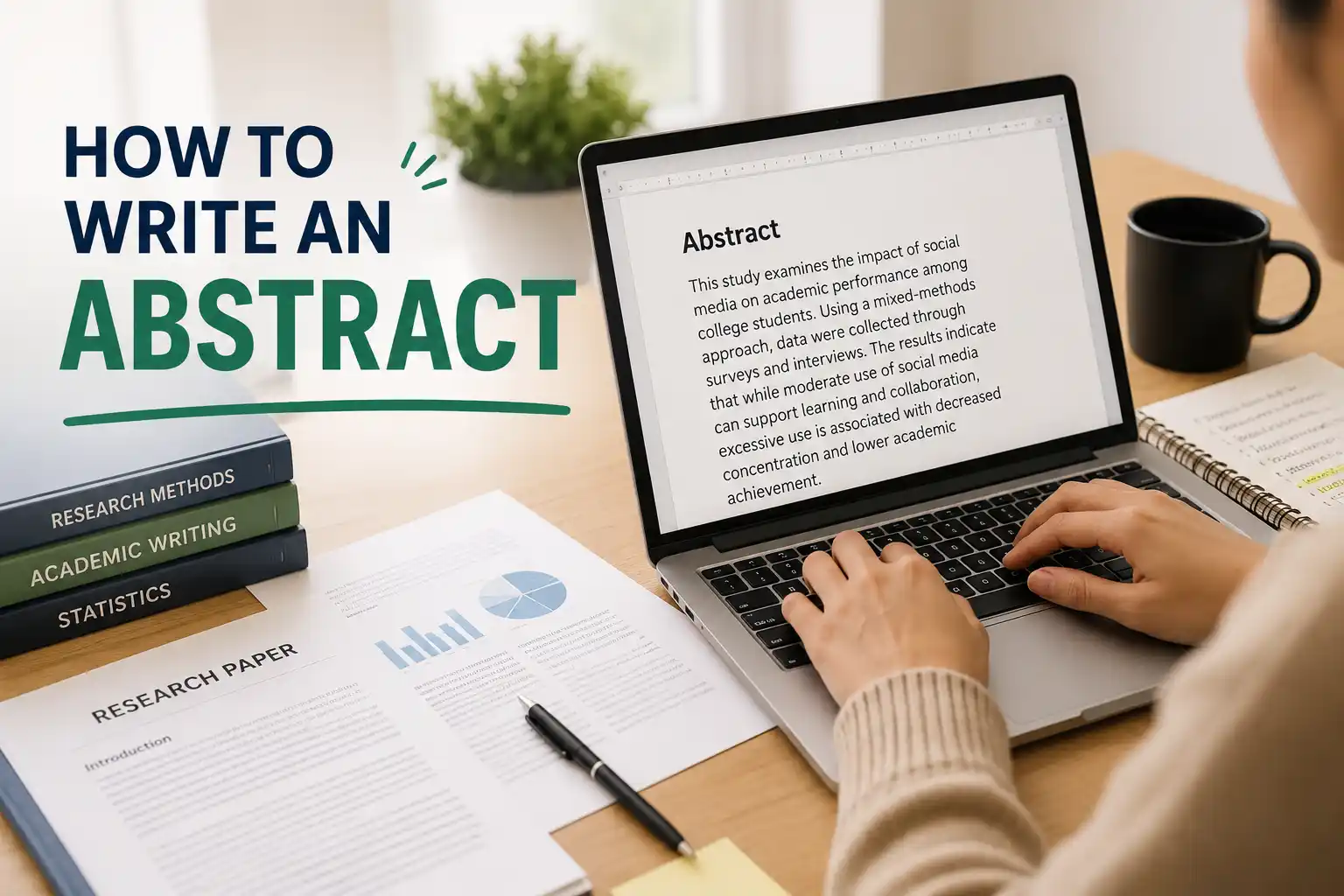
You've spent months researching, writing, and revising your paper. But here's the thing: most people will never read past your abstract. That 150-300 word paragraph is your only chance to convince readers and journal editors that your work matters.
An abstract isn't just a summary. It's a marketing tool, a filtering mechanism, and often the difference between your paper being read or ignored. Yet so many writers treat it as an afterthought, written hastily at the last minute.
This guide will walk you through everything you need to know: the four essential components, practical templates, real examples from successful papers, and common mistakes to avoid. By the end, you'll be able to write abstracts that work.
Quick Reference: Abstract Essentials
Most journals have specific requirements. Always check the author guidelines before submitting.
1 What Is an Abstract? (And Why It Matters)
An abstract is a concise summary of a research paper, thesis, review, conference proceeding, or any in-depth analysis. It serves as a standalone document that helps readers quickly understand the essence of your work.
The Filtering Role
Researchers scan hundreds of abstracts to find relevant papers. If yours isn't clear and compelling, they'll move on. Your abstract is your work's first impression.
Database Indexing
Abstracts are indexed in academic databases like PubMed, Google Scholar, and Scopus. Well-written abstracts with good keywords help people discover your research.
Conference Acceptance
Conference organizers evaluate submissions based on abstracts alone. A weak abstract means rejection regardless of your research quality.
Citation Impact
Studies show that clearer, more readable abstracts lead to more citations. People can't cite what they can't understand.
2 Descriptive vs. Informational Abstracts
Not all abstracts are the same. Understanding the two main types helps you choose the right approach:
Descriptive Abstract
Length: 50-150 words
Focus: What the paper covers (not results)
Best for: Humanities, theoretical papers, literature reviews
Structure: Background → Purpose → Scope → Overview
Informational Abstract
Length: 150-300 words
Focus: Results and conclusions
Best for: Sciences, empirical research, clinical studies
Structure: Background → Problem → Method → Results → Conclusion
Most research papers use informational abstracts. They provide concrete findings that readers can evaluate immediately.
3 The 5-Step Framework for Any Abstract
Whether you're writing for science, humanities, or business, follow this proven structure:
Step 1: State the Problem (1-2 sentences)
Step 2: Describe Your Method (1-2 sentences)
Step 3: Report Key Results (2-3 sentences)
Step 4: State Your Conclusion (1-2 sentences)
Step 5: Add Keywords (3-6 terms)
Need to Check Your Abstract Length?
Most abstracts have strict word limits (150-300 words). Our free word counter helps you stay within limits while tracking your key sections.
Count Your Abstract Words4 Ready-to-Use Templates
Copy and customize these templates for your specific field:
Scientific / Medical Research
Social Sciences / Humanities
Business / Management
5 Real Examples: Before and After
Let's look at a weak abstract and see how to improve it:
Weak Abstract (What NOT to do)
"This paper is about social media and mental health. I looked at some studies and found interesting things. The results show that social media affects people differently. More research is needed in this area. The paper concludes with some recommendations."
Problems: Vague language ("interesting things"), no specifics, no numbers, no clear findings, filler phrases.
Strong Abstract (What to do)
"Background: Social media's impact on adolescent mental health remains debated, with mixed findings across studies.
Methods: This meta-analysis synthesized 45 longitudinal studies (N=127,000 adolescents, ages 13-17) examining the relationship between daily social media use and depression symptoms measured by the CES-DC scale.
Results: Higher social media use (≥3 hours/day) was associated with a 28% increased risk of clinically significant depression symptoms (OR=1.28, 95% CI: 1.18-1.39, p<0.001). Effect was strongest for passive use (scrolling) versus active use (posting).
Conclusion: Limiting passive social media use to under one hour daily may reduce depression risk. Clinical guidelines should differentiate between use types.
Keywords: social media, adolescent mental health, depression, meta-analysis, screen time"
What works: Specific numbers, clear methods, effect sizes, confidence intervals, actionable conclusion, good keywords.
6 7 Common Abstract Mistakes (And How to Fix Them)
1. Too Vague
Mistake: "Interesting results were found."
Fix: "Results showed a 32% reduction in errors (p=0.003)."
2. Too Long
Mistake: 400+ words for a 300-word limit
Fix: Cut background details, save them for the introduction.
3. No Results
Mistake: "Findings are discussed" without sharing them
Fix: Report actual numbers, percentages, or statistical significance.
4. Citing Sources
Mistake: "(Smith, 2020) found that..."
Fix: Abstracts rarely include citations. Save them for the paper.
5. Jargon Overload
Mistake: Using inaccessible technical terms
Fix: Write for a broader audience within your field.
6. Writing First
Mistake: Writing the abstract before finishing the paper
Fix: Write the abstract last, when you know exactly what you found.
7. No Keywords
Mistake: Forgetting to include searchable terms
Fix: Add 3-6 keywords that researchers would actually search.
7 Final Checklist: Is Your Abstract Ready?
Before You Submit, Verify:
✓ Does it state the problem clearly?
✓ Does it explain your method?
✓ Does it report specific results (not just "interesting findings")?
✓ Does it state a clear conclusion or implication?
✓ Does it fit within the word limit?
✓ Does it stand alone (readable without the full paper)?
✓ Does it avoid citations, figures, tables, and footnotes?
✓ Does it use keywords researchers would search?
✓ Does it avoid vague language ("seems to," "suggests that") without evidence?
✓ Did you check the journal's specific abstract requirements?
The Read-Aloud Test
Read your abstract aloud. Does it flow naturally? Would you understand it if you heard it at a conference? If you stumble, your readers will too. Revise until it sounds clear and confident.
The Bottom Line
Your abstract is the most important paragraph you'll write. It's your research's ambassador, its first impression, and often its only chance to reach readers.
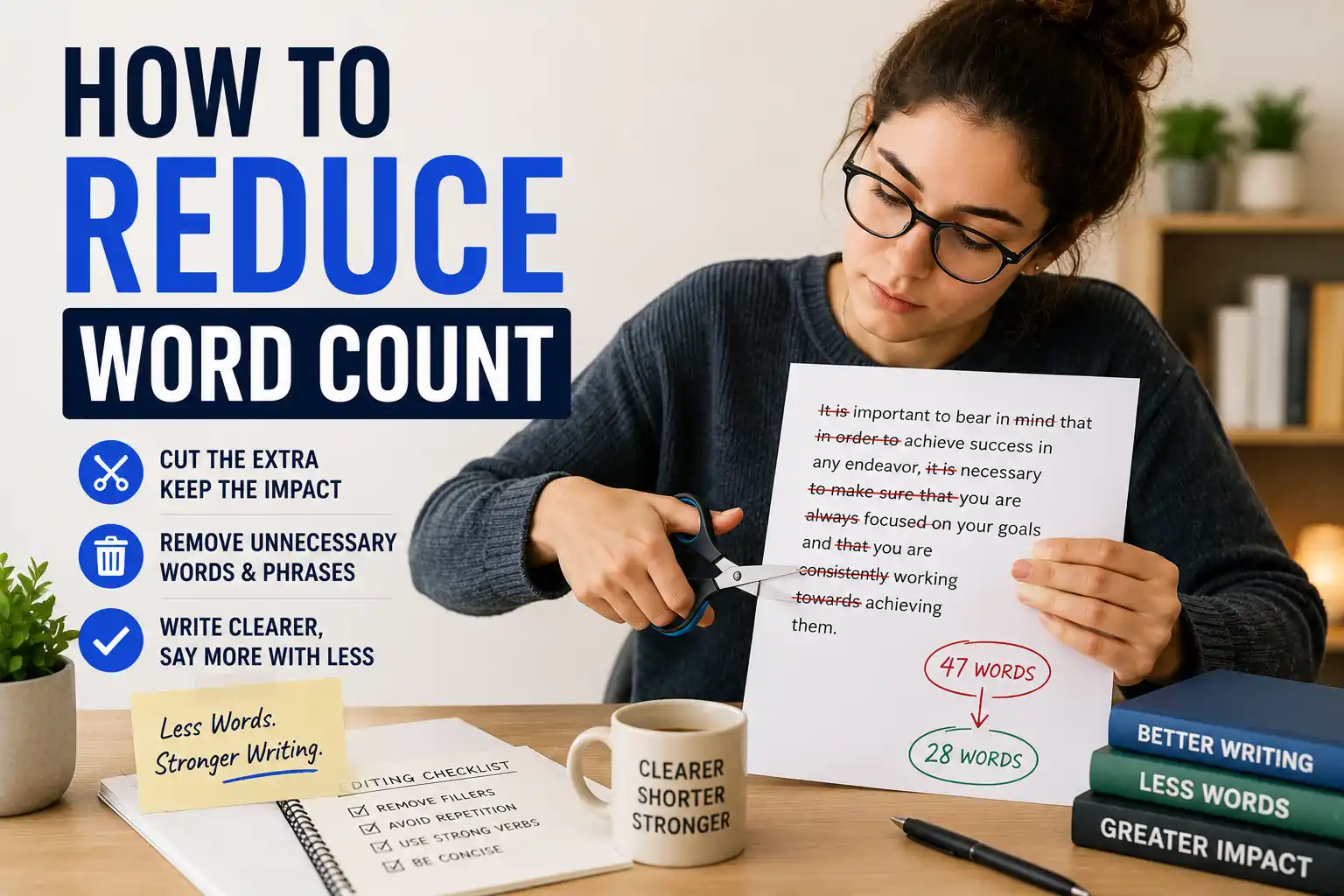
Write it last. Revise it ruthlessly. Make every word earn its place.
A great abstract doesn't just summarize your work — it sells it. It makes busy researchers stop scrolling and think, "I need to read this paper."
Take the extra hour to polish your abstract. It's the highest-leverage writing you'll do.