How to Write a Short Story: A Complete Guide for Beginners
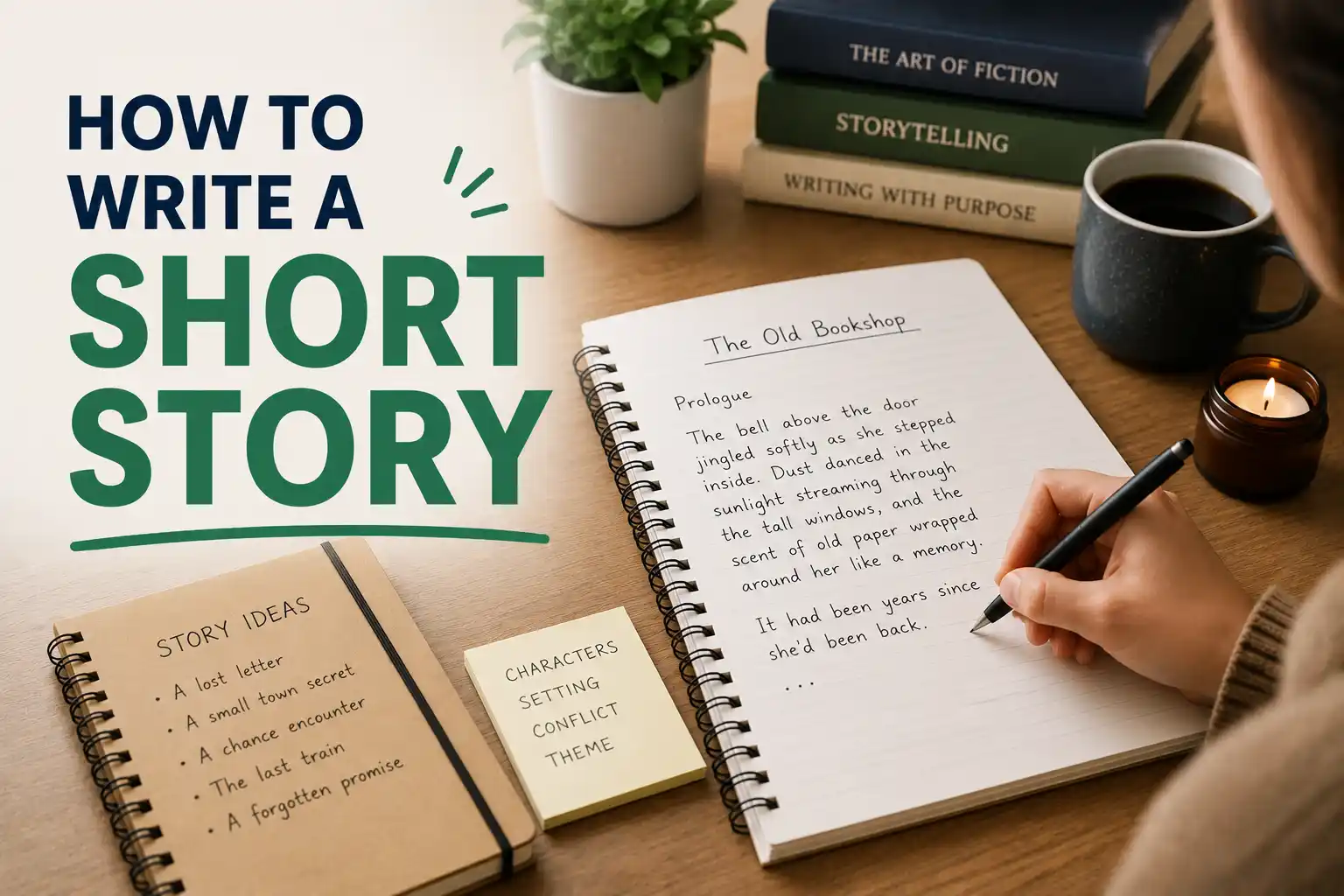
You have a character in your head. A scene that won't leave you alone. A what-if question that keeps you up at night. That's a short story trying to be born.
Short stories are the perfect place to start. They're small enough to finish, big enough to matter. In a few thousand words, you can create a world, break a heart, or change a perspective.
This guide will walk you through everything you need to know to write your first short story from finding the idea to publishing your finished work. No experience required. Just a willingness to try.
Short Story at a Glance
A short story is a novel's intense cousin—everything matters, nothing is wasted, and every word earns its place.
1 Why Write Short Stories? The Perfect Starting Point
Before you tackle a novel, master the short story. Here's why they're worth your time:
Finishable
You can complete a short story in days or weeks, not months or years. That feeling of finishing? It's addictive and motivating.
Skill Building
Short stories force you to master the essentials: character, conflict, dialogue, pacing, and endings. No room for fluff.
Publication Opportunities
Literary magazines, contests, and anthologies publish thousands of short stories every year. Quicker path to seeing your name in print.
Idea Testing
Not sure if your novel idea works? Write a short story set in that world. Test your characters. Find your voice.
2 The 8-Step Short Story Writing Process
Step 1: Find Your Idea
What's the seed? A character? A situation? A "what if"? Start with something that intrigues you.
Step 2: Create Your Protagonist
Who is your main character? What do they want? What's in their way? Give them a flaw and a desire.
Step 3: Outline the Plot
Even a short outline helps. Know where you're starting and where you're ending. The middle can surprise you.
Step 4: Write the First Draft
Don't edit. Don't judge. Just get the story down. Perfectionism kills first drafts. Give yourself permission to write badly.
Step 5: Let It Rest
Step away for a few days. Read other stories. Clear your mind. Fresh eyes catch what tired eyes miss.
Step 6: Revise
Read your story aloud. Cut unnecessary words. Strengthen weak sentences. Add sensory details.
Step 7: Get Feedback
Share with trusted readers. Writing groups, critique partners, or beta readers. Listen to what resonates and what confuses.
Step 8: Submit or Share
Send it to literary magazines. Post it online. Print it for friends. Stories are meant to be read.
Track Your Story's Length
Use our free word counter to track your progress. Most short stories fall between 1,000-7,500 words , perfect for literary magazines.
Count Your Words3 Plot Structures That Work for Short Stories
Short stories don't have room for complex subplots. Stick to one central conflict. Here are proven structures:
The Classic Arc
Exposition: Introduce character and ordinary world.
Inciting incident: Something changes.
Rising action: Character struggles.
Climax: The turning point.
Resolution: New normal.
The "Man in a Hole"
Character starts okay → something bad happens → character struggles → character gets out (or doesn't). Simple, effective, emotional.
The Twist Ending
Story builds one way → final paragraph reveals everything was different. Popularized by O. Henry and Roald Dahl.
The Slice of Life
No major plot. Just a moment. A conversation. An observation. The change is internal, not external.
1. Hook: First sentence/paragraph grabs attention.
2. Inciting incident: Something disrupts the normal world.
3. Rising action: Character tries to fix things (and fails, escalating tension).
4. Climax: The final confrontation or decision.
5. Resolution: Shows how the character has changed.
4 Creating Characters Readers Care About
What Makes a Great Protagonist?
✓ A clear desire: What do they want? (The plot is how they try to get it)
✓ A flaw or weakness: Something they need to overcome
✓ A secret: Something they're hiding (even from themselves)
✓ Specificity: Not "a detective" but "a detective who can't let go of his first unsolved case"
✓ Voice: The way they speak and think—unique and memorable
Creating Conflict
Internal conflict: Character vs. themselves (fear, guilt, indecision)
External conflict: Character vs. another person, society, or nature
Best short stories combine both: A woman must decide whether to leave her husband (internal) while he's being arrested (external)
Showing Character Through Action
5 Setting: Making Your World Feel Real
Choosing Your Setting
One location is often enough for a short story. A diner, a bus, a kitchen, a waiting room. The setting should serve the story—not distract from it.
Using Weather
Weather creates mood. Rain for sadness or cleansing. Fog for confusion. Sunshine for hope or false security. Use it deliberately.
Time of Day
Morning suggests beginnings. Night suggests secrets, fear, or romance. Dusk is transition. Time of day changes everything.
Sensory Details
Don't just describe what things look like. What does the place smell like? Sound like? Feel like? Engage all five senses.
A coffee shop at 8 AM: Bright, busy, smells like espresso. A woman checks her phone nervously—she's meeting someone.
The same coffee shop at 11 PM: Dim lights, one barista wiping counters. A man sits alone with a cold cup, staring at an empty chair across from him.
Same location. Different time. Completely different story.
6 Writing Dialogue That Sounds Real
Dialogue DOs
✓ Read dialogue aloud (if it sounds awkward spoken, rewrite it)
✓ Use subtext (what's unsaid is often more important)
✓ Give each character a unique voice (word choice, rhythm)
✓ Keep it brief (real conversation is full of pauses—trim them)
✓ Use dialogue to reveal character, not just deliver information
Dialogue DON'Ts
❌ "As you know..." dialogue (characters shouldn't tell each other things they already know)
❌ Overusing names in conversation ("Hello, John." "Hi, Mary." "How are you, John?")
❌ Perfect grammar (people interrupt, use fragments, start sentences with "So" and "Well")
❌ Too much small talk (cut the "hellos" and "goodbyes" unless they matter)
Dialogue Examples
7 Openings and Endings: First and Last Impressions
Powerful Opening Strategies
Start in the middle of action: "The gun went off before he finished his sentence."
Start with intriguing dialogue: "You're not going to believe this, but..."
Start with a strange detail: "The mailbox hadn't been painted red, but rust."
Start with a promise: "The last time I saw my father, he was climbing out a window."
What to avoid: Waking up, weather reports, backstory dumps.
Satisfying Ending Strategies
The echo ending: Return to an image or line from the beginning (but changed).
The twist: Reveal something that redefines everything before.
The emotional punch: A final line that breaks your heart or makes you smile.
The open ending: Not everything resolved. Let the reader imagine.
What to avoid: "And then I woke up." "They lived happily ever after." Explaining the theme.
📖 "It was a bright cold day in April, and the clocks were striking thirteen." — 1984, George Orwell
📖 "Many years later, as he faced the firing squad, Colonel Aureliano Buendía was to remember that distant afternoon when his father took him to discover ice." — One Hundred Years of Solitude, Gabriel García Márquez
📖 "The story so far: in the beginning, the universe was created. This has made a lot of people very angry and been widely regarded as a bad move." — The Restaurant at the End of the Universe, Douglas Adams
8 Revision: From Good to Great
Read Aloud
Your ear catches what your eye misses. Clunky sentences. Repetitive words. Awkward dialogue. Read every word.
Cut 10%
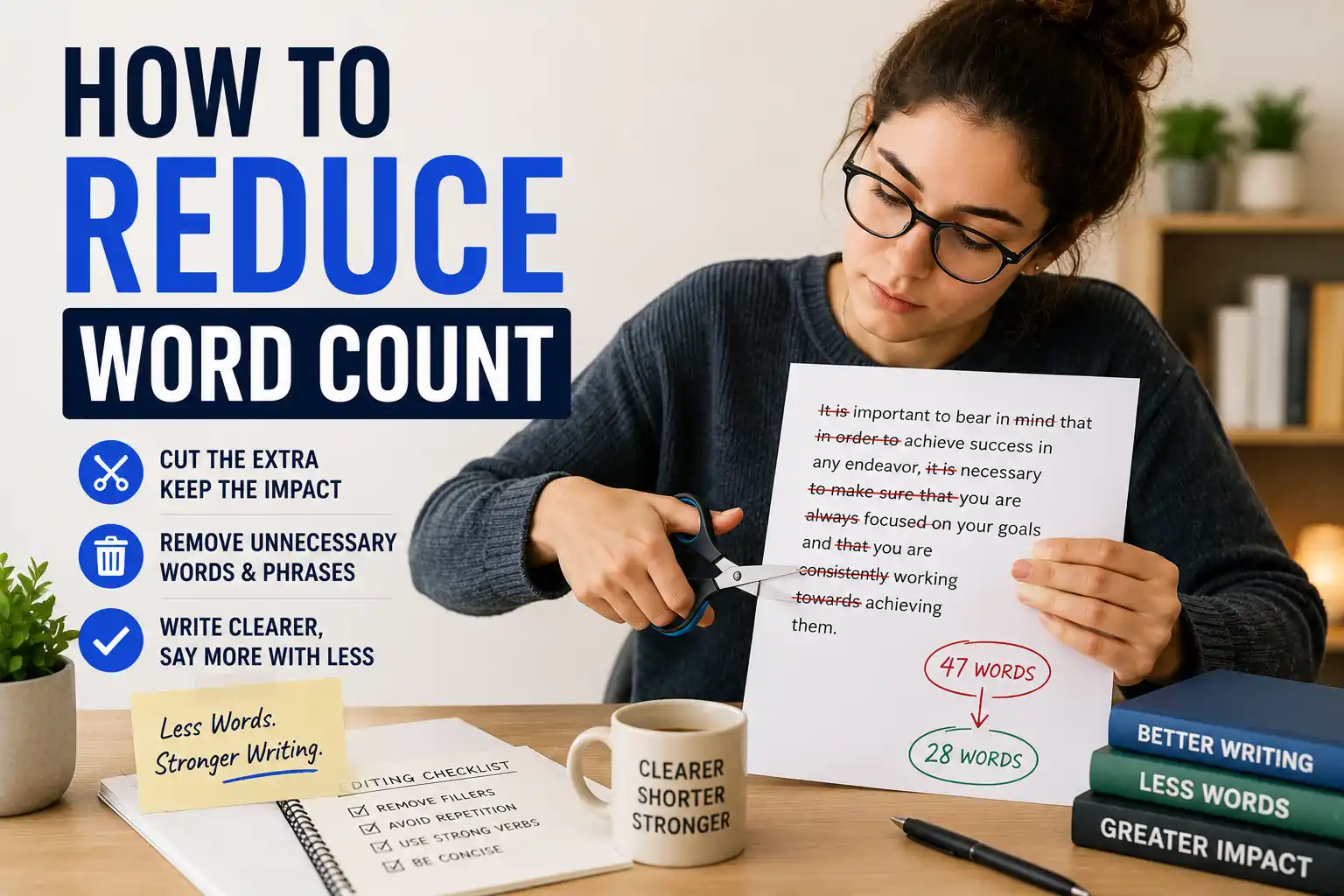
Challenge yourself to remove 10% of your word count. Adverbs, adjectives, "that," "very," "just," "really." Tighten every sentence.
Show, Don't Tell
Find every "felt," "saw," "heard," "knew," "realized." Replace with concrete action and sensory detail.
Check Each Scene
Does every scene advance plot or reveal character? If not, cut it. Short stories have no room for filler.
9 Where to Submit Your Short Stories
Online Literary Magazines
Websites like The Masters Review, Electric Literature, and hundreds more accept submissions. Many pay and have no submission fees.
Print Journals
Ploughshares, The Paris Review, Granta. Extremely competitive but career-making. Read them before submitting.
Contests
Writers Digest, Glimmer Train (closed now but many exist), local contests. Winning = publication + credibility + money.
Self-Publishing Online
Medium, Substack, your own blog, Wattpad, or Amazon KDP. Build an audience directly without gatekeepers.
Submission Tips for Beginners
✔️ Read the magazine before submitting. Know what they publish.
✔️ Follow submission guidelines exactly (font, formatting, method).
✔️ Submit to magazines that publish writers at your level.
✔️ Expect rejection. Stephen King was rejected 30 times for Carrie.
✔️ Submit to the next place immediately. Keep going.
10 Your Short Story Checklist
The Bottom Line
Your first short story probably won't be perfect. That's fine. Write it anyway. Then write another one. And another one.
Every published writer started exactly where you are now. They didn't have more talent. They just finished their stories when others didn't.
Short stories teach you the craft faster than anything else. You'll learn about character, plot, dialogue, pacing, and endings—all in a few thousand words. Each story makes you a better writer.
So stop waiting for permission. Stop waiting for the perfect idea. Stop waiting until you feel ready.
Write the story only you can write. Start today. One word at a time.