How to Write a Letter: The Complete Guide with Examples
You need to write a letter. Perhaps it is a formal complaint, a heartfelt thank you, a cover letter for a job, or a letter to a loved one. You know it should be clear and effective, but you are not sure about the format, the tone, or what to include.
You are not alone. Writing a letter is a skill that many people find challenging. But a well-crafted letter can open doors, build relationships, and express what words alone cannot. Whether it is a formal business letter or a personal note, the ability to write a good letter is a valuable skill.
This guide will teach you everything you need to know about how to write a letter , from the structure and formatting to the tone and content. We will cover different types of letters, common mistakes to avoid, and provide examples to guide you. By the end, you will have the tools to write letters that are clear, professional, and impactful.
Letter Writing at a Glance
1 What Is a Letter and Why Does It Matter?
A letter is a written message addressed to a specific person or organisation. It is one of the oldest and most enduring forms of communication. Letters can be formal or informal, professional or personal, but they all share one thing in common: they are a deliberate, thoughtful way to communicate.
Letters matter because they are personal and permanent. Unlike a quick email or text message, a letter shows that you have taken the time to craft your words carefully. A well-written letter can strengthen relationships, convey complex ideas, and create a lasting impression.
In a world of instant digital communication, a letter stands out. It is a tangible, thoughtful gesture that says, "You matter to me." Whether you are applying for a job, expressing gratitude, or making a formal request, a letter gives your words weight and significance.
Personal Connection
A letter creates a personal connection between the writer and the reader. It shows that you care enough to write thoughtfully.
Permanent Record
Letters create a permanent record of your thoughts and communications. They can be kept, re-read, and treasured.
Professional Impression
A well-written formal letter projects professionalism and credibility. It can open doors and create opportunities.
Thoughtful Expression
A letter allows you to express yourself thoughtfully and completely, without the pressure of a real-time conversation.
2 The Fundamentals of Writing a Letter
Before you start writing, it is essential to understand the core principles that guide effective letter writing.
Know Your Audience
Who are you writing to? What is your relationship to them? What do they need to know? Tailor your letter to your audience. A letter to a close friend will be different from a letter to a potential employer.
Be Clear and Concise
State your purpose clearly and early. Do not make the reader guess why you are writing. Use simple, direct language and avoid unnecessary words.
Choose the Right Tone
The tone of your letter should match your purpose and audience. A formal letter requires a professional, respectful tone. A personal letter can be warm and conversational. Choose your words carefully to convey the right feeling.
Follow the Correct Format
Different types of letters follow different formats. A formal business letter has a specific structure with sender and recipient information, a salutation, body, closing, and signature. A personal letter is more flexible but should still be clear and well-organised.
The "BLUF" Principle
In letter writing, use the BLUF (Bottom Line Up Front) approach. State your main point or request in the first paragraph. Then provide supporting details. This respects the reader's time and ensures your message is understood even if they only skim the letter.
3 How to Format a Formal Letter
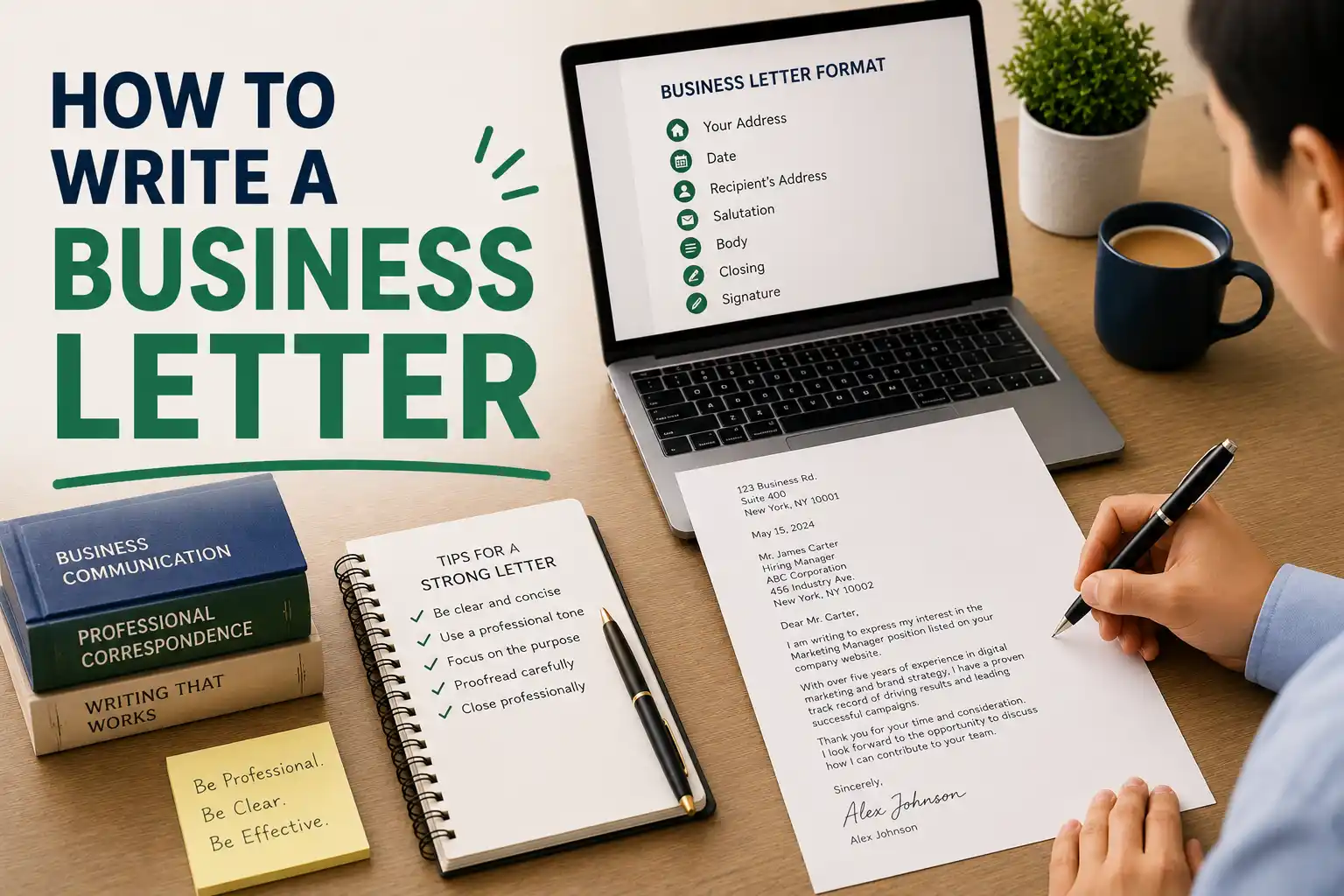
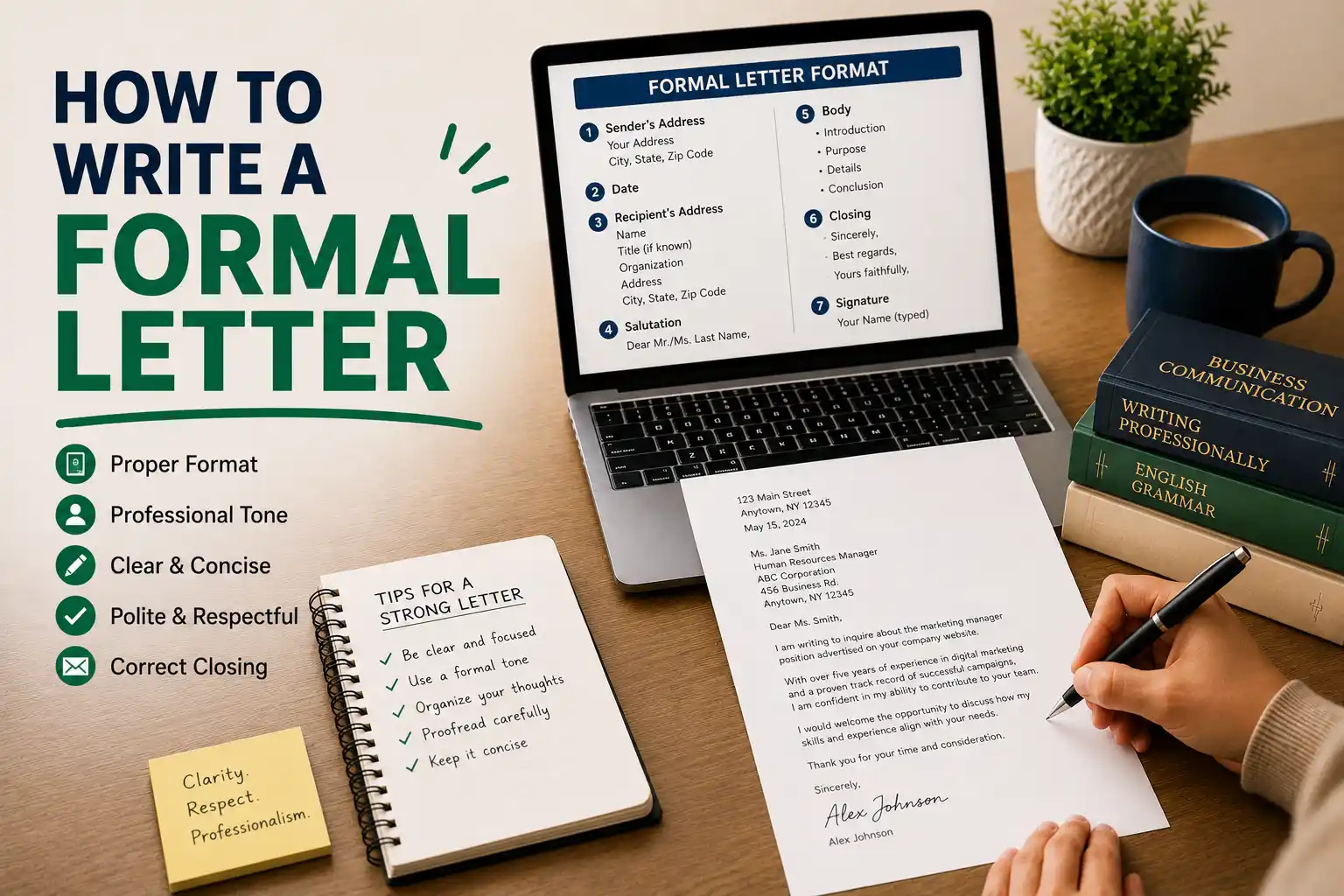
Formal letters follow a standard structure that readers expect. Here is the essential format.
Sender's Information
Include your full name, address, phone number, and email address at the top of the letter. If you are using company letterhead, this information is already printed.
Date
Include the date you are writing the letter. Use the full date format (e.g., "July 19, 2026").
Recipient's Information
Include the recipient's full name, title, company name, and address. Ensure the spelling and title are correct.
Subject Line
A subject line summarises the purpose of the letter (e.g., "Subject: Application for Marketing Manager Position"). It helps the reader understand the content at a glance.
Salutation
Use a formal salutation. If you know the recipient's name, use "Dear [Title] [Last Name]:" or "Dear [Full Name]:". If you do not know the name, use "Dear Sir/Madam:" or "To Whom It May Concern:".
Body
The body of your letter should be clear and well-organised. State your purpose in the first paragraph, provide details in the middle paragraphs, and conclude with a call to action or summary.
Closing
Use a formal closing such as "Yours sincerely," "Yours faithfully," or "Sincerely," followed by your signature (for printed letters) and typed name.
Formal Letter Structure
- Sender's information: Your name, address, phone, email
- Date: Full date
- Recipient's information: Name, title, company, address
- Subject line: Brief summary of the purpose
- Salutation: "Dear [Name]:"
- Opening paragraph: State your purpose
- Body paragraphs: Details and supporting information
- Closing paragraph: Summary and call to action
- Closing: "Yours sincerely," or "Sincerely,"
- Signature: Your signature and typed name
4 How to Format a Personal Letter
Personal letters are less formal than business letters, but they still benefit from a clear structure. Here is a simple format.
Date
Include the date at the top of the letter.
Salutation
Use a warm salutation such as "Dear [Name]," or "Hi [Name]," depending on your relationship with the recipient.
Body
Write in a natural, conversational tone. Share your news, thoughts, or feelings. Be genuine and personal.
Closing
Use a warm closing such as "With love," "Yours truly," "Best wishes," or "Take care," followed by your name.
Personal Letter Structure
- Date: Full date
- Salutation: "Dear [Name],"
- Opening: Warm greeting and catch-up
- Body: Share news, thoughts, or feelings
- Closing: Warm closing and signature
5 Types of Letters and What to Include
There are many types of letters, each with a specific purpose. Here are the most common types and what to include in each.
Cover Letters
Sent with a CV or application. Introduces you, highlights your qualifications, and expresses interest in a position.
Include: Introduction, relevant experience, why you are interested, call to action.
Business Letters
Used for professional communication. Can be a request, complaint, proposal, or official notification.
Include: Clear purpose, supporting details, professional tone, call to action.
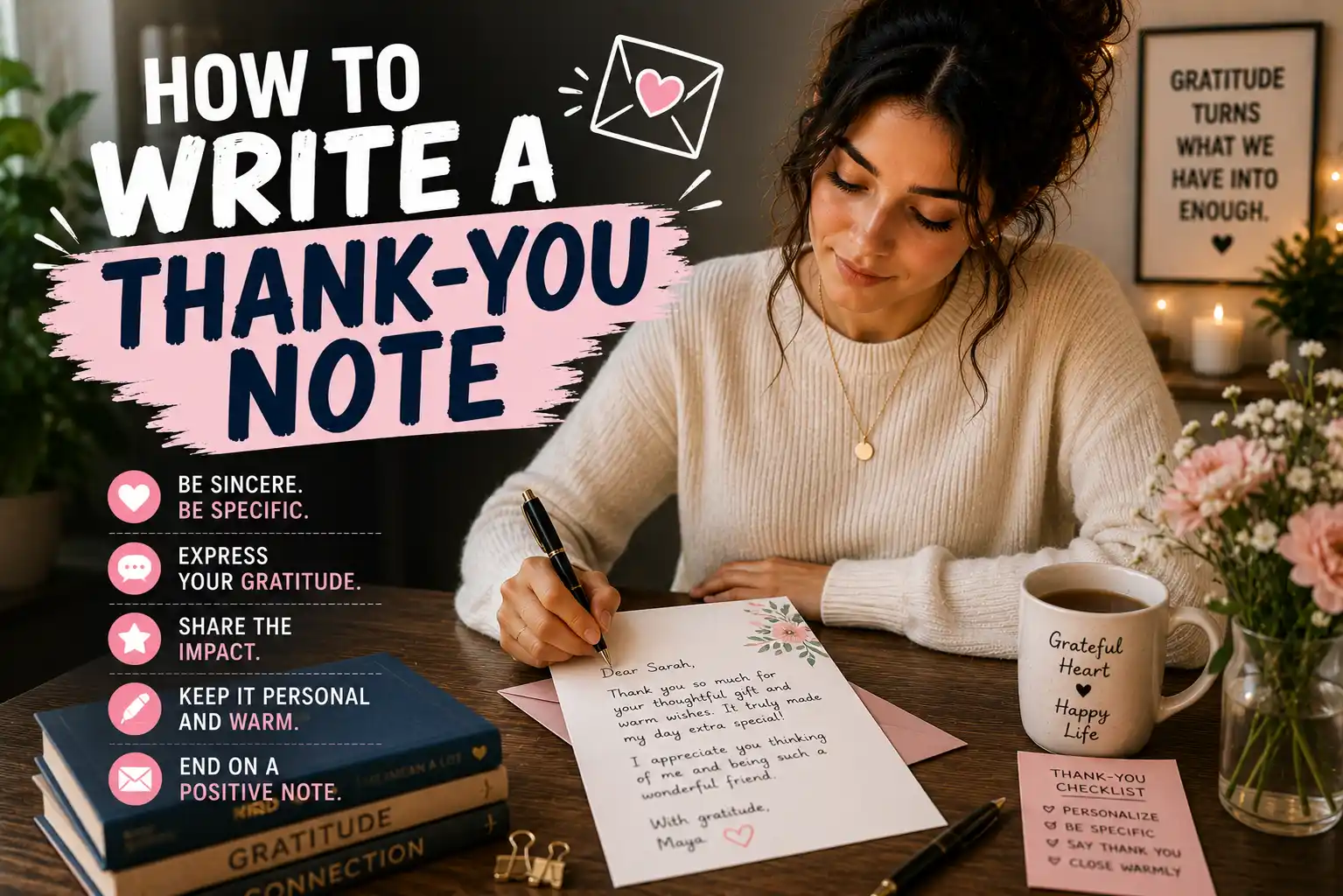
Thank You Letters
Used to express appreciation for a gift, favour, or professional opportunity.
Include: Specific thank you, what you appreciate, how it made you feel, warm closing.
Letters of Recommendation
Used to endorse someone's qualifications for a job or program.
Include: Your relationship to the candidate, specific examples of their abilities, strong endorsement.
Complaint Letters
Used to express dissatisfaction and seek resolution. Should be professional and constructive.
Include: Clear description of the issue, evidence, desired resolution, professional tone.
Personal Letters
Used to communicate with friends and family. Can be about anything , news, feelings, memories.
Include: Warm greeting, personal news, questions for the recipient, warm closing.
6 How to Write a Letter: Step-by-Step
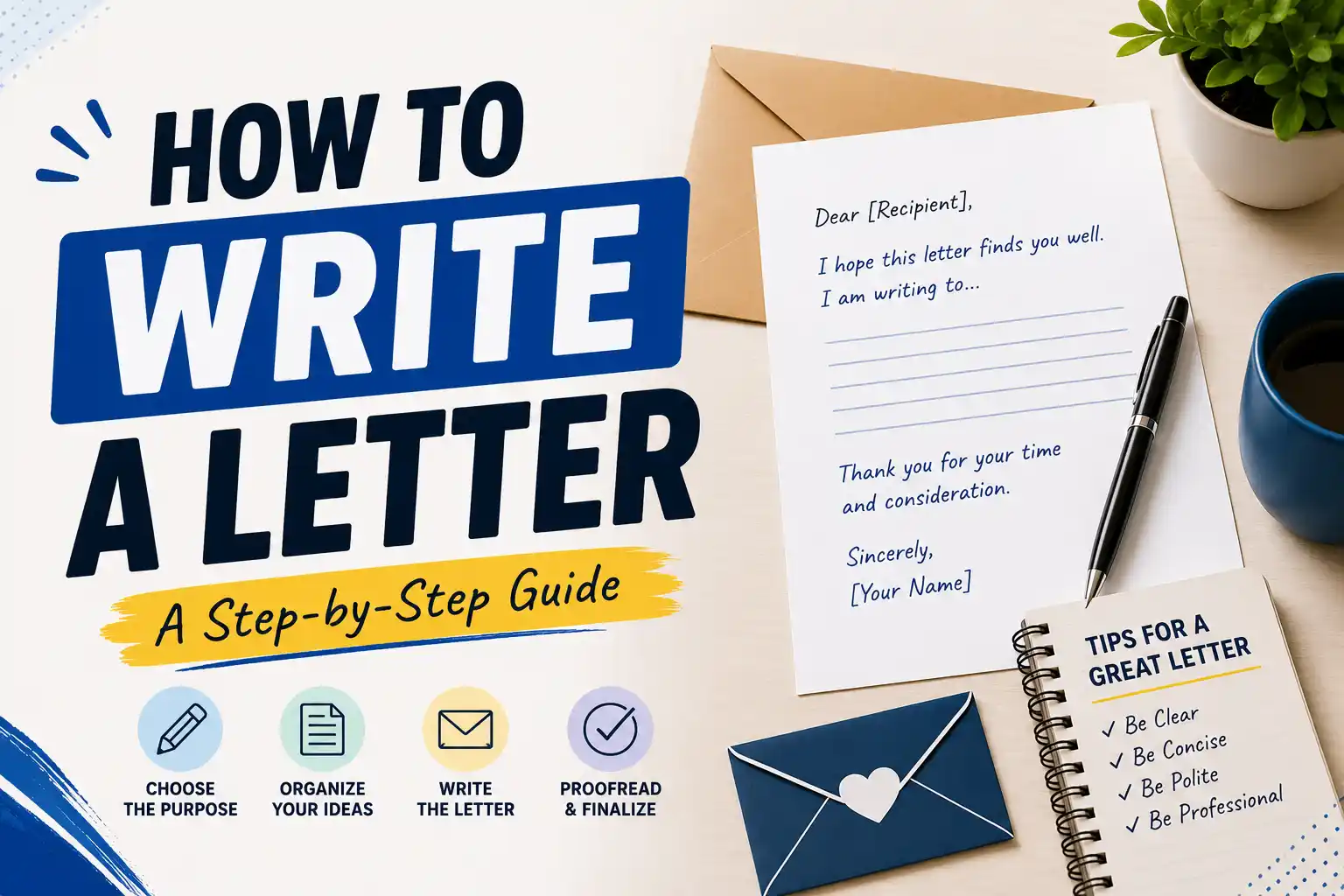
Here is a step-by-step process for writing any type of letter.
Step 1: Identify Your Purpose
Why are you writing? What do you want the reader to know or do? Be clear about your purpose before you start writing.
Step 2: Know Your Audience
Who are you writing to? What is your relationship to them? Tailor your tone and content to your audience.
Step 3: Choose Your Format
Decide whether you are writing a formal or personal letter. Use the appropriate format for your purpose and audience.
Step 4: Write the Opening
State your purpose clearly in the first paragraph. For formal letters, include the subject line. For personal letters, start with a warm greeting.
Step 5: Write the Body
Provide the details and supporting information. Be clear, concise, and well-organised.
Step 6: Write the Closing
Summarise your main point, state any follow-up action, and use an appropriate closing.
Step 7: Revise and Proofread
Review your letter for clarity, tone, and errors. A polished letter demonstrates professionalism.
Sample Cover Letter
[Your Name]
[Your Address]
[Your Phone]
[Your Email]
[Date]
[Recipient Name]
[Recipient Title]
[Company Name]
[Company Address]
Dear [Recipient Name],
I am writing to apply for the position of Marketing Manager at [Company Name], as advertised on your website. With over five years of experience in digital marketing and a proven track record of driving engagement, I am confident that I would be a valuable addition to your team.
In my current role at [Current Company], I have successfully led campaigns that increased online engagement by 35% and generated a 20% increase in revenue. I am particularly drawn to [Company Name]'s commitment to innovation and customer-centric approach.
I have attached my CV for your review and would welcome the opportunity to discuss my application further at your convenience. Thank you for considering my application.
Yours sincerely,
[Your Signature]
[Your Typed Name]
7 Common Mistakes to Avoid
Even experienced writers make mistakes. Here are the most common errors and how to avoid them.
Incorrect Format
Using the wrong format for the type of letter you are writing. A formal business letter requires a different structure than a personal letter.
Fix: Use the appropriate format for your purpose and audience.
Wrong Tone
Using a tone that is too formal for a personal letter or too casual for a business letter.
Fix: Match your tone to your audience and purpose.
Being Too Vague
Failing to state your purpose clearly or leaving the reader guessing about what action to take.
Fix: State your purpose in the first paragraph and make your call to action clear.
Poor Spelling and Grammar
Errors in spelling and grammar undermine your credibility and professionalism.
Fix: Proofread carefully. Use spell-check. Ask someone else to review it.
Being Too Long
Writing a letter that is too long and includes unnecessary information.
Fix: Be concise. Include only what is necessary and relevant.
Forgetting the Call to Action
Not telling the reader what to do next.
Fix: Always include a clear call to action. What do you want the reader to do?
8 Tone and Language in Letters
The tone and language of your letter are just as important as the content. Here is how to get them right.
Formal Letters
Use a professional, respectful tone. Avoid contractions, slang, and overly casual language. Use formal salutations and closings. Be direct and clear.
Personal Letters
Use a warm, conversational tone. Write as you speak. Use contractions and informal language. Be genuine and heartfelt.
Be Positive and Constructive
Even when addressing a complaint or difficult topic, frame your message positively and constructively. Focus on solutions, not problems.
Formal Language
"I am writing to formally request your assistance with this matter."
Personal Language
"I wanted to reach out and see if you could help me with this."
9 How to Revise Your Letter
A great letter is not written; it is rewritten. Revision is where your letter goes from good to great. Here is a step-by-step process for revising your letter.
Step 1: Check for Clarity
Is your purpose clear? Is the letter easy to read and understand? If not, revise for clarity.
Step 2: Check the Tone
Is the tone appropriate for your audience and purpose? If it feels too formal or too casual, adjust it.
Step 3: Check for Completeness
Have you included all the essential information? Is your call to action clear?
Step 4: Check for Errors
Proofread carefully for spelling, grammar, and punctuation errors.
Step 5: Check the Formatting
Is the letter properly formatted? Are the margins correct? Is the font consistent?
Step 6: Get Feedback
Ask a trusted colleague or friend to review your letter. Fresh eyes can catch issues you have missed.
10 Practice Exercises to Improve Your Letters
The best way to get better at writing letters is to practice. Here are some exercises to help you sharpen your skills.
Exercise 1: Write a Formal Complaint Letter
Write a formal complaint letter about a product or service. Focus on being clear, professional, and constructive.
Exercise 2: Write a Cover Letter
Write a cover letter for a job you are interested in. Highlight your relevant experience and skills.
Exercise 3: Write a Thank You Letter
Write a thank you letter to someone who has helped you recently. Be specific about what you are grateful for.
Exercise 4: Write a Personal Letter
Write a personal letter to a friend or family member. Share news, ask questions, and express your feelings.
Final Thoughts
Writing a letter is a valuable skill that can open doors, build relationships, and express what words alone cannot. Whether you are writing a formal business letter or a heartfelt personal note, the ability to write a clear, effective letter is essential.
Remember that a letter is not just about conveying information. It is about connecting with the reader. Think about who you are writing to, what they need to know, and how you want them to feel. Write with clarity, sincerity, and purpose.
Keep these principles in mind as you write:
- Know your audience. Tailor your tone and content to the reader.
- Be clear and concise. State your purpose directly.
- Choose the right tone. Match your tone to your purpose and audience.
- Follow the correct format. Use the appropriate structure for your type of letter.
- Proofread carefully. A polished letter demonstrates professionalism.
Letter writing is a skill that can be learned and improved. With practice, you will become more confident and effective. Your letters will reflect your professionalism and help you achieve your goals.
Now go write a letter that makes a difference.